Guide
How to negotiate rent in London
Checked 10 November 2026For England, rules from 1 May 2026Rents: October 2026 asking rentsHow we worked it out
Yes, downwards and before you sign: ask once, in writing, with two or three comparable listings and something in return, and we'd ask for 3% to 5% off. Since 1 May 2026 the advert is a ceiling, because a landlord cannot accept offers above it.
£325median gap between an updated and a plain 2-bed, across 337 London areas: what a dated flat lets you quote
In short
Yes, you can negotiate rent in London, downwards and before you sign, and we'd ask for 3% to 5% off.
Since 1 May 2026 the advertised rent is a ceiling, because a landlord cannot accept offers above it.
The ask we would make is specific: two or three comparable listings, the area's typical rent for the flat's finish, one written request and something in return. Every area figure here is counted from the 337 areas with at least 10 listings behind their 2-bed rent, and in 302 of them 5% off an updated flat's typical rent is still no lower than a typical plain flat asks, so a 3% to 5% ask is not out of line.
Want the wording? Go straight to the emails to send. To try it now, set a 2-bed and a budget on the Citycomb map and open the area you viewed in.
1Can you negotiate rent in London?
Yes, but only downwards: since 1 May 2026 a landlord must put a specific price in any written advert and cannot accept or encourage offers above it.
The rule is in GOV.UK's Renters' Rights Act overview for tenants, and a council can fine a landlord or agent up to £7,000 for breaking it (Renters' Rights Act 2025, section 57). It does not oblige a landlord to accept less, so a lower ask can get a no. The rental bidding ban guide has the rule in full.
What it changes for you is the risk. The advert is the most you will pay, so a polite request for less costs nothing and nobody can leap over you by offering more.
2What should the email say?
Keep it short: name the area, quote the evidence, make one ask and offer something back.
The figures below are the Sydenham worked example further down; put your own area's typical rents in their place.
Send the email the evening of the viewing, while you can still describe the flat, and give links to the listings rather than attachments.
Email 1: the advert is above the typical rent
Hello, I would like to take the 2-bed from [start date]. The typical updated 2-bed in Sydenham is £1,900, from 16 listings, and two similar flats are here: [link] and [link]. I can sign this week with references ready. Would the landlord accept £1,900 a month?
Email 2: a dated flat
Hello, I viewed the 2-bed and would like to take it from [start date]. The kitchen and bathroom are dated, and the typical Basic 2-bed in Sydenham is £1,800, from 16 listings. I am asking for £50 above that, £1,850 a month, because the flat is dated but not the plainest in the area. I can sign this week with references ready. Would the landlord accept £1,850 a month?
The first asks for £100, or 5.0%, off the £2,000 advert. The second asks for £150, or 7.5%, off: more than the 3% to 5% we'd usually ask, because the flat is dated and the Basic rent is your evidence. If the answer is no, ask once for something that costs the landlord little, such as a start date that suits you, then decide. The timing guide covers when you may have more room to ask.
3What evidence persuades a landlord?
Two or three comparable listings, and the area's typical rent for the flat's finish, are harder to refuse than "I would like less".
- the middle area's gap, as a share of its own updated rent
- 13%
- median gap in the 36 areas near a zone 1 station
- £800
- median gap in the 19 areas near a zone 6 station
- £175
Each Citycomb area page gives a typical asking rent for a 1, 2 or 3-bed flat at three finishes: Basic for plain or dated flats, Mid for updated and well kept, and Premium for the best. The gap between Basic and Mid is what a dated flat lets you quote. Across the 337 areas the median gap is £325 a month, and as a share of each area's own Mid rent the middle area's gap is 13%.
In 30 of the 337 areas the gap is under £100, and in 7 there is none. There a dated flat gives you little to quote, so we'd ask for 3% and lean on the start date. In 302 areas a 5% ask off the Mid rent is still no lower than the typical Basic rent, so asking for it is not out of line.
An area's zone here is the zone of its nearest station, and 3 of the 337 areas have none, so the chart covers 334.
The gap is widest near the centre and narrows towards the edge, which is why the same dated kitchen is worth more to quote near a zone 1 station than near a zone 5 one.
4How do you work out your ask?
Start from where the advert sits among the area's three typical rents, then pick the figure to quote.
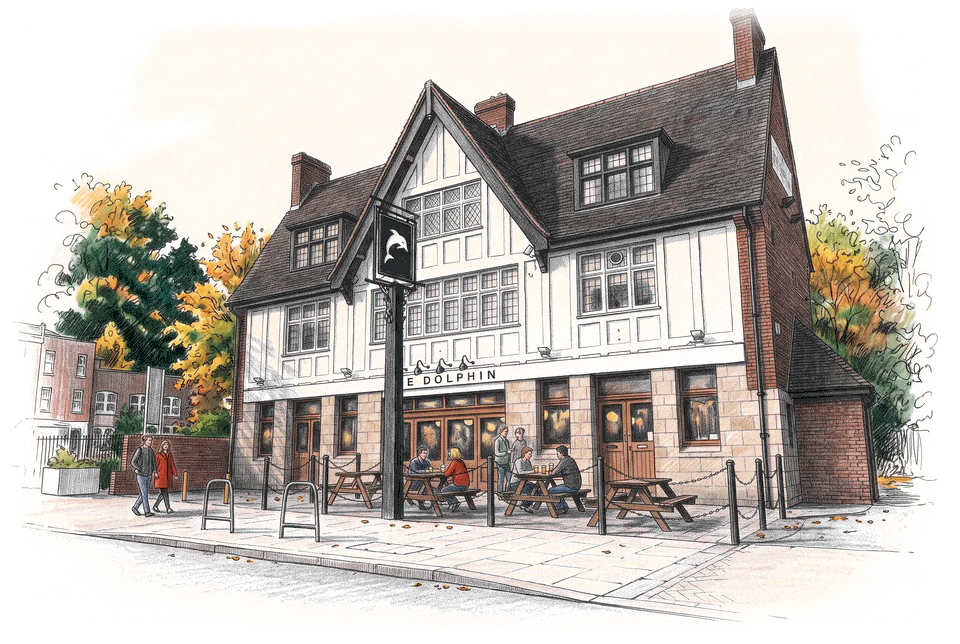
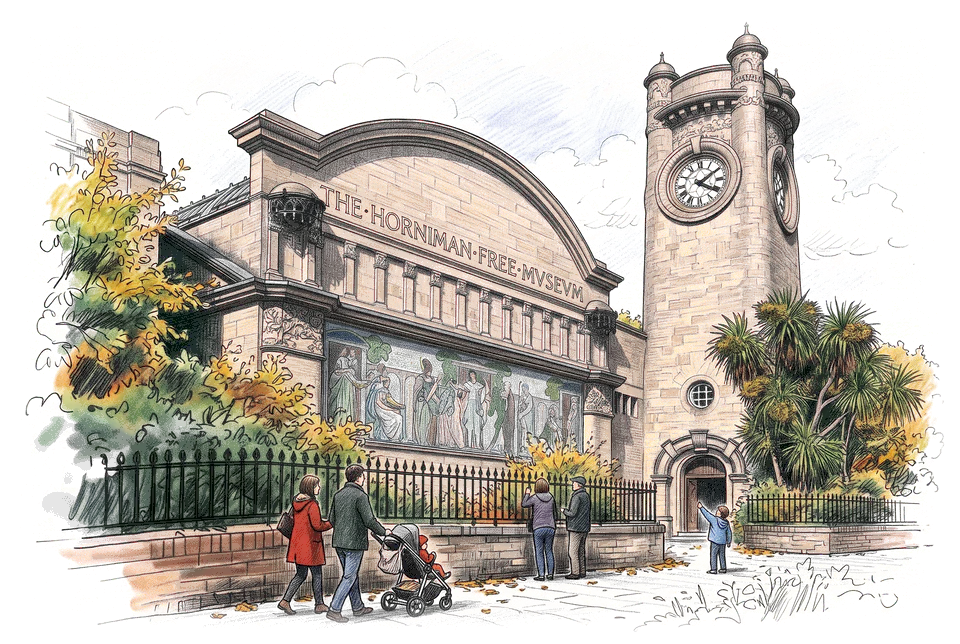
You view a 2-bed in Sydenham advertised at £2,000. Sydenham is the area in the drawing at the top, with Crystal Palace Park as the nearest green space on its area page, and every example here uses it; the working is the same in any area. Its typical 2-bed is £1,900 at Mid finish, £1,800 at Basic and £2,550 at Premium, from 16 listings.
For your own area, read its Basic, Mid and Premium 2-bed rents on its area page, or start from the rent pages, and use them in place of Sydenham's.
£1,900 is the typical updated rent, the figure to quote against a £2,000 advert.
A £2,000 2-bed in Sydenham is £100 above the typical Mid rent and £550 below Premium
| Basic: plain or dated | £1,800 |
|---|---|
| Mid: updated, well kept | £1,900 |
| The advert£100 above Mid | £2,000 |
| Premium: the best finish | £2,550 |
The advert sits between Mid and Premium. If the flat looks updated and well kept, £1,900 is the figure to quote, and tired fittings give you a case for less. If it is a Premium finish, £2,000 is well under the area's £2,550, so the start date is the better thing to ask for. Sydenham's total journey time to Bank is 45 minutes, against 28 from Hither Green and 39 from Ladywell, so say what that is worth to you too. To try it for yourself, open Hither Green on the map at 2 beds and £2,000 and read its three typical rents before you write.
5How much should you ask for?
We'd ask for 3% to 5% off the advert, which is our judgement and not a measured acceptance rate.
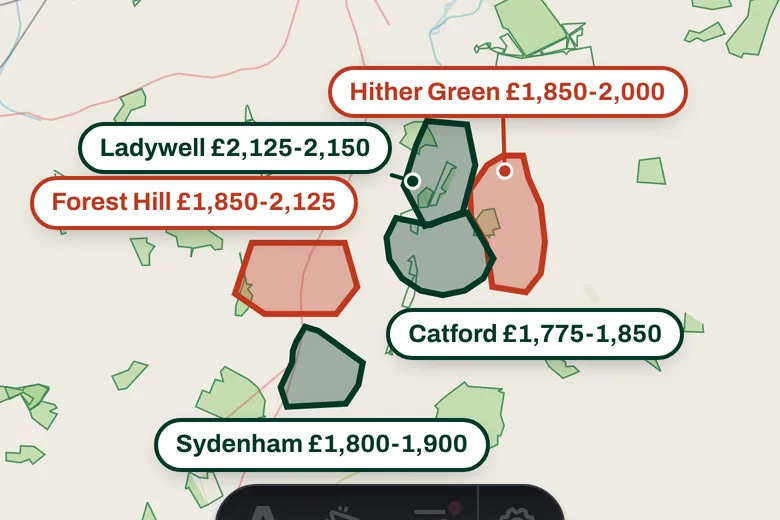
On the median 2-bed, £2,375 a month, that is £71 to £119 a month. Outside Citycomb, in March 2026 Zoopla's Rental Market Report (reported by Mortgage Solutions on 11 March 2026) put competition at 4.8 enquiries per available home, the lowest in six years, with homes taking 20 days on average to let, and said the slower market gave renters more choice and opportunity to negotiate. That describes conditions, not how often an ask works. On the typical updated (Mid) rent in five south-east London areas, 3% and 5% come to:
| Area, typical Mid 2-bed | 3% a month | 5% a month |
|---|---|---|
| Catford, £1,850 | £55.50 | £92.50 |
| Sydenham, £1,900 | £57 | £95 |
| Hither Green, £2,000 | £60 | £100 |
| Forest Hill, £2,125 | £63.75 | £106.25 |
| Ladywell, £2,150 | £64.50 | £107.50 |
Lower rent can come with a longer journey: Hither Green is 28 minutes to Bank and Catford is 47. The 2-bed under £2,250 page shows 2-beds up to £2,250.
In these five areas, a plain 2-bed is £25 to £275 below an updated one.
Five south-east London areas: a plain 2-bed is £25 to £275 below an updated one
Before you pay a holding deposit, agree the rent, the start date and any promised work in writing; GOV.UK caps the holding deposit at one week's rent.
6What else can you ask for?
If the rent will not move, ask for something else, and get it in writing with a date.
- The start date. A later date can save you paying two rents at once.
- Work before you move in. Any agreed repair or deep clean, with a date.
- Rent in advance. No rent is payable before you sign, and GOV.UK says you can then be asked for at most 1 month's rent in advance.
- No renewal to haggle over. There is no fixed term to renew, so the yearly rent increase is the point to negotiate; the Renters' Rights Act guide lists the other changes.
- A repair, not a discount. Report faults in writing with photos and dates and carry on paying rent; a reduction is for the landlord to agree, and the damp and mould repairs guide covers what to do if nothing happens.
If your budget is the constraint, start with the affordability guide. Before you ask for less, check the area's typical rent on its page, for example Brixton, Peckham, Tooting Broadway and Putney. The ending a tenancy guide covers your notice if you cannot agree.
7What if it is a rent increase, not a new let?
Reply in writing with comparable homes, and apply to the tribunal before the new rent period starts (Housing Act 1988, section 13(4)).
GOV.UK says you can challenge a proposed rise above the market rent.
London rents rose 3.5% in the 12 months to September 2026 (ONS), and the calculator opens on that rise applied to a £2,000 rent, £2,070, for a 2-bed in Sydenham, where our typical asking rent is £1,900; the rent increase guide has the steps.
How big is your rent rise?
+3.5%a rise of £70 a month, £840 a year
- Rent now
- £2,000
- New rent
- £2,070
- Typical 2-bed in Sydenham
- £1,900
The new rent is £170 above the typical asking rent for a 2-bed in Sydenham.
See rents in SydenhamA worked example: £2,000 rising to £2,070 a month, for a 2-bed in Sydenham. Turn on JavaScript to type your own.
The typical asking rent is our Mid figure from homes advertised in that area, so it is the price of a new let; areas with no figure are not listed. A rent rise can come once a year at most, never in the first year, and only by a notice in the prescribed form (Form 4A for a private landlord). Since 1 May 2026 that notice must give at least two months, and a rent review clause in the tenancy has no effect; you can ask the First-tier Tribunal to set the open market rent (GOV.UK; Housing Act 1988, section 13).
8For tenants
This is general information for England, not legal advice; for your case, Shelter, Citizens Advice or a solicitor.
- Find two or three comparable listings and the area's typical rent for the flat's finish.
- Ask once, in writing, for 3% to 5% off the advert, and offer something in return.
- Do not offer above the advert: the landlord cannot accept it.
- Agree the rent in writing before you pay a holding deposit.
- On a rent increase, reply in writing and apply to the tribunal before the new rent period starts if you disagree.
9For landlords
A landlord or agent must advertise one specific rent and cannot accept or encourage offers above it.
The rule stops offers above the advert; it does not stop you agreeing to less.
To raise the rent in a tenancy, use Form 4A, at most once a year and not in the first 12 months, with at least two months' notice. A tenant can challenge a rise above the market rent at the tribunal. The landlord rent increase guide has the steps.
10Rules and dates
The Renters' Rights Act rules below are in force from 1 May 2026 (SI 2026/421), apart from the rule that rent rises once a year and not in the first 12 months, which comes from section 13 of the Housing Act 1988 and predates that date. All were read on 9 November 2026.
| Rule | In force | Source |
|---|---|---|
| Advertise a specific rent; no accepting or encouraging offers above it (section 56) | 1 May 2026 | GOV.UK overview; section 56, legislation.gov.uk |
| Council penalty up to £7,000 (section 57) | 1 May 2026 | section 57, legislation.gov.uk |
| Rent rises at most once a year and not in the first 12 months | Before 1 May 2026 (Housing Act 1988, section 13) | GOV.UK overview; section 13, legislation.gov.uk |
| Rise on Form 4A with at least 2 months' notice | 1 May 2026 | GOV.UK overview; Housing Act 1988, section 13(2)(a) |
| No rent before signing; at most 1 month's rent in advance after | 1 May 2026 | GOV.UK overview |
| Holding deposit at most one week's rent | 1 June 2019 | Tenant Fees Act 2019, Schedule 1, paragraph 3(3), legislation.gov.uk; GOV.UK guidance |
What else do people ask?
Can you negotiate rent in London?
Yes, downwards and before you sign. GOV.UK says a landlord must include a specific price in any written advert or offer and cannot accept or encourage offers above it, so you can ask for less but nobody can outbid you.
How to negotiate rent with a landlord?
Ask once, in writing, with two or three comparable listings and the area's typical rent, and offer something in return such as a firm start date. Agree the rent in writing before you pay a holding deposit.
Can a landlord refuse a lower offer?
Yes. The rule on bids only stops a landlord accepting more than the advertised rent, and nothing obliges them to accept less. A polite, evidenced ask costs nothing, and the answer can still be no.
How much can you negotiate rent down?
There is no set figure. We'd ask for 3% to 5%, which is Citycomb's judgement rather than a measured acceptance rate. On the median 2-bed, £2,375 a month, that is about £71 to £119 a month, or £855 to £1,425 over a year.
How to negotiate a rent increase?
GOV.UK says a landlord can raise rent only once a year, not in the first 12 months, using Form 4A with at least two months' notice. Reply in writing with comparable homes, and note that you can challenge a rise above the market rent. London rents rose 3.5% in the 12 months to September 2026 (ONS), which is £70 a month on £2,000.
How to negotiate rent renewal?
Most tenancies no longer have a renewal: GOV.UK says most existing assured shorthold tenancies became assured periodic ones on 1 May 2026, and a tenancy can no longer have an end date. The point to negotiate is the yearly rent increase.
How to ask for a rent reduction due to repairs?
Report the fault to your landlord, and we'd do it in writing with photos and dates. GOV.UK says to carry on paying rent while you wait, and to contact the council's environmental health department if nothing happens. A reduction is for the landlord to agree, not something you can take.
How did we work this out?
The figures, their dates and sources
The bidding ban (section 56), the penalty (section 57), the notice for a rent increase and the one-month cap on rent in advance are in force from 1 May 2026 (SI 2026/421). They come from GOV.UK's Renters' Rights Act overview for tenants (last updated 1 May 2026) and, for the £7,000 penalty, section 57 of the Renters' Rights Act 2025 on legislation.gov.uk. The holding deposit rule is GOV.UK's Tenant Fees Act 2019 guidance (updated 7 July 2026), in force since 1 June 2019. The tribunal route for a rent increase is section 13(4) of the Housing Act 1988 as amended. The holding deposit cap in Schedule 1, paragraph 3(3) of the Tenant Fees Act 2019 was read on 10 November 2026; all other sources were read on 9 November 2026. The ONS figures are from its bulletin "Private rent and house prices, UK: October 2026", released 21 October 2026, section 5, private rents by English region: London annual rent inflation was 3.5% in the 12 months to September 2026 and the average London rent was £2,338 a month. It was the latest release on 9 November 2026.
Rents are Citycomb's typical asking rents for a 2-bed from public listings collected in October 2026, at Basic (typical for plain or dated flats), Mid (updated, well kept) and Premium finish. Of Citycomb's areas, 337 have at least 10 listings behind their 2-bed figure, and only those are counted, the same rule the app follows. The gap is Mid less Basic: the difference between two typical asking rents in nearby listings, not the same flat at two finishes and not what landlords accepted. The zone is the zone of the area's nearest station: 36, 94, 73, 71, 41 and 19 areas for zones 1 to 6, and 3 areas have none. The median gap, £325, is the middle of the 337 gaps. Taken as a share of each area's own Mid rent, the middle area's gap is 13% (12.96%). Area pages round some figures to the nearest £50, so a figure here can differ from an area page by £25.
The Sydenham figures (Basic £1,800, Mid £1,900, Premium £2,550, from 16 listings) and the other four areas on the map are from the same data. Total journey times to Bank (Sydenham 45 minutes, Hither Green 28, Ladywell 39, Catford 47) are the walk, wait, ride and walk for a 09:00 weekday arrival, from Citycomb's journey engine built 7 October 2026. The 3% to 5% ask is Citycomb's judgement, not a measured acceptance rate, and its sums are arithmetic. Zoopla's 4.8 enquiries per available home and 20 days to let are from its Rental Market Report as reported by Mortgage Solutions on 11 March 2026 (read 9 November 2026); the report says the slower market gave renters more choice and opportunity to negotiate, and it is a market-conditions benchmark, not a rate of successful asks. Forest Hill's Mid rent is £2,125 from 18 listings. The £2,000 advert, the £2,000 rent rise and the sample emails are examples. Sydenham is the worked example because it is the area in the hero drawing; the same working applies to any area page.
Where do these figures come from?
- GOV.UK: Renters' Rights Act overview for tenants (updated 1 May 2026), 9 November 2026
- GOV.UK: Tenant Fees Act 2019, guidance for tenants (updated 7 July 2026), 9 November 2026
- legislation.gov.uk: Renters' Rights Act 2025, section 56 (rental bidding), 9 November 2026
- legislation.gov.uk: Renters' Rights Act 2025 (Commencement No. 2 and Transitional and Saving Provisions) (England) Regulations 2026, SI 2026/421, 9 November 2026
- legislation.gov.uk: Renters' Rights Act 2025, section 57 (financial penalties), 9 November 2026
- legislation.gov.uk: Tenant Fees Act 2019, Schedule 1, paragraph 3 (holding deposit; the cap is sub-paragraph 3), 10 November 2026
- legislation.gov.uk: Housing Act 1988, section 13 (increase of rent under periodic tenancies), 9 November 2026
- GOV.UK: Private renting, repairs, 9 November 2026
- ONS: Private rent and house prices, UK: October 2026 (released 21/10/2026), section 5, 9 November 2026
- Mortgage Solutions: number of tenants competing for rented homes drops to six-year low, Zoopla (11 March 2026), 9 November 2026
- Citycomb area data, October 2026: typical 2-bed rents by finish, 9 November 2026
- Citycomb area data, October 2026: Sydenham, 9 November 2026
- Citycomb journey engine, built 7 October 2026: total journey times to Bank, 9 November 2026