Guide
Section 13 rent increase in England: how to challenge it
Checked 9 November 2026England onlyRules read 9 November 2026Rents: October 2026 asking rentsHow we worked it out
A landlord in England can propose any rent, once a year, on a Form 4A notice with at least two months' notice. Before the new rent starts you can apply to the First-tier Tribunal (Form MR1, £47) to set the open market rent, and it can never set more than the notice asks.
Written for: A London tenant who has been sent a rent rise, or a landlord about to send one, in England.
£60-£298a month added by 3.5% on a typical 2-bed, Addiscombe (42 listings) to Mayfair (116), among areas with 16+ listings
In short
There is no cap on a section 13 rent rise, but you can apply to the tribunal before the new rent starts, and it can never set more than the notice asks.
Before you reply, check three dates: the day the notice reached you, the day the new rent would start (at least two months later), and the day your tenancy began or its rent last rose (never within 52 weeks before). If the figure looks too high, apply to the tribunal before the start date. To see whether it is high, open the map on 2-beds and read your area's typical asking rent beside the figure on your notice.
This guide is for England and for assured tenancies, which covers almost every private rental. The rules changed on 1 May 2026, and rent now rises only through the process below, whether you rent through an agent or a private landlord. It is general information, not legal advice; for your case, Shelter, Citizens Advice or a solicitor.
On Monday 1 February 2027 a tenant paying £2,300 for a 2-bed in Peckham finds a Form 4A in the post. The tenancy began on 1 June 2025 and the rent has not risen. The notice proposes £2,450 from Thursday 1 April 2027, which is two months, and £150 more a month, £1,800 more a year, or 6.5%. That is nearly double the 3.5% London average, and it sounds like a tribunal case. Yet a typical 2-bed in Peckham asks £2,425, so the new rent is only £25 above what a similar flat is advertised at. The percentage is not the test; the market rent for your own home is.
A £2,450 proposal on a £2,300 rent in Peckham adds £150 a month, £1,800 a year, and sits £25 above the typical asking rent.
A £2,450 proposal on a £2,300 rent in Peckham is £150 more a month and £1,800 more over a year
| Rent nowa month | £2,300.00 |
|---|---|
| Rent on the noticea month, from 1 April 2027 | £2,450.00 |
| Extra each month6.5% more | £150.00 |
| Extra over a year | £1,800.00 |
1How a rent rise works
The rule is one notice, one start date and one rise a year.
- the least notice a landlord must give
- 2 months
- to apply to the tribunal
- £47
- London rents, 12 months to September 2026
- 3.5%
All of these rules have been in force since 1 May 2026 for assured tenancies outside social housing (SI 2026/421, regulation 2); we found none announced but not yet in force.
| Rule | Where it comes from |
|---|---|
| Form 4A, with at least 2 months' notice | s.13(2)(a); GOV.UK |
| One rise a year, none in the first 12 months, then 52 weeks between rises | s.13(2)(b), (2)(c), (3A), (3B); GOV.UK |
| Rent rises only by notice, by an agreement that follows a notice, or by a tribunal decision; a clause that says otherwise has no effect | s.13(4A) |
| A tenant can apply to the tribunal before the new rent starts | s.13(4) and s.14 |
| The tribunal's rent is the market rent or the proposed rent, whichever is lower | s.14ZB(5) |
2What a rise costs in London
The ONS has London private rents up 3.5% in the 12 months to September 2026 (release of 21 October 2026, average London rent £2,338).
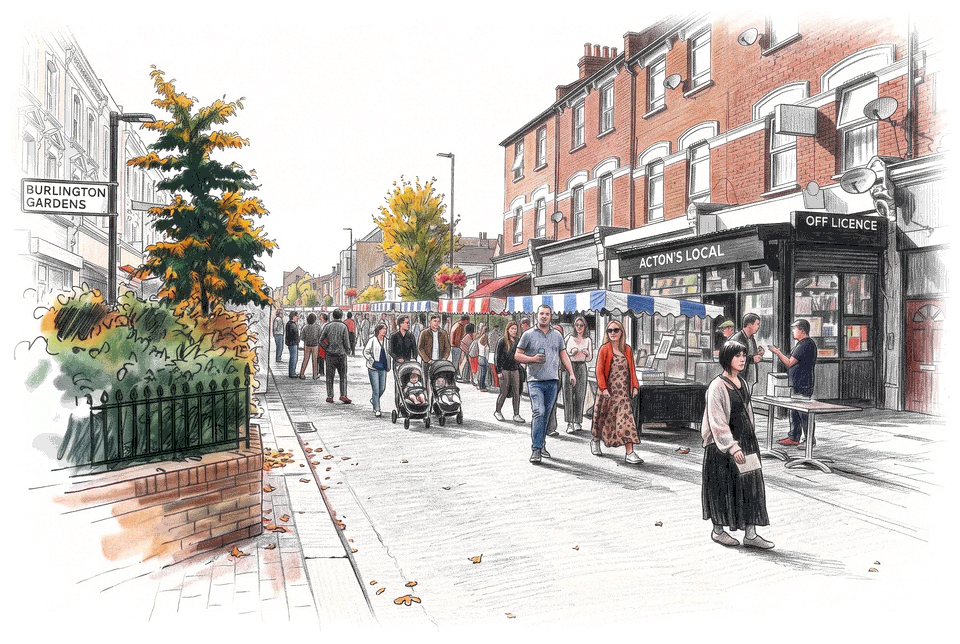
Treat 3.5% as a yardstick, not a cap: a notice can propose more. On the typical 2-bed asking rent it adds £60 a month in Addiscombe and £298 in Mayfair.
| Area | Listings | Typical 2-bed asking rent | 3.5% adds a month |
|---|---|---|---|
| Addiscombe | 42 | £1,725 | £60 |
| Bexleyheath | 18 | £1,850 | £65 |
| Leyton | 28 | £2,200 | £77 |
| Peckham | 16 | £2,425 | £85 |
| Tooting Broadway | 29 | £2,575 | £90 |
| Acton | 56 | £2,675 | £94 |
| Hampstead | 49 | £3,475 | £122 |
| Mayfair | 116 | £8,525 | £298 |
In 22% of London areas Citycomb has a 2-bed rent for, 3.5% adds more than £100 a month, and in 143 it adds under £70. If the rent on your notice sits well above your area's typical figure, that is the notice to take a closer look at; only the tribunal sets the open market rent, comparing similar homes, so the table is a starting point and not a prediction.
Try your own numbers. The calculator opens on the Peckham example above, £2,300 rising to £2,450, and shows how far the new rent sits from the typical asking rent for a 2-bed there.
How big is your rent rise?
+6.5%a rise of £150 a month, £1,800 a year
- Rent now
- £2,300
- New rent
- £2,450
- Typical 2-bed in Peckham
- £2,425
The new rent is £25 above the typical asking rent for a 2-bed in Peckham.
See rents in PeckhamA worked example: £2,300 rising to £2,450 a month, for a 2-bed in Peckham. Turn on JavaScript to type your own.
The typical asking rent is our Mid figure from homes advertised in that area, so it is the price of a new let; areas with no figure are not listed. A rent rise can come once a year at most, never in the first year, and only by a notice in the prescribed form (Form 4A for a private landlord). Since 1 May 2026 that notice must give at least two months, and a rent review clause in the tenancy has no effect; you can ask the First-tier Tribunal to set the open market rent (GOV.UK; Housing Act 1988, section 13).
Now do the same for your own home: open the map on 2-beds, click your area and read its typical asking rent next to the figure on your notice. In Peckham that reads £2,425 against the £2,450 asked. If your notice is far above your area's figure, the £47 application is worth weighing.
3For tenants
The letter has just landed, and you have at least two months.
Write down the day it reached you and the day the new rent would start, and count the gap. Keep the envelope or the email, because GOV.UK does not say when a notice counts as received. Served on Monday 1 February 2027 with rent due on the 1st, the Peckham notice cannot start the new rent before Thursday 1 April 2027, and the last day to apply is Wednesday 31 March 2027.
When does the notice end?
Thursday 1 April 2027the earliest day the new rent can start
- Notice given
- Monday 1 February 2027
- Two months on
- Thursday 1 April 2027
- Last day to apply to the tribunal
- Wednesday 31 March 2027
The new rent starts at the beginning of a rent period at least two months after the notice is served (Housing Act 1988 s.13(2)(a)). The tenant can apply to the First-tier Tribunal until the day before it starts (s.13(4), s.14(A3)).
A worked example: a landlord giving notice of a rent rise on Monday 1 February 2027, rent due on the 1st. Turn on JavaScript to type your own.
These are the earliest dates the law allows for assured tenancies in England since 1 May 2026, counting from the day the notice is given or served (allow extra days if it goes by post). A tenant's notice must be in writing, and a shorter time than two months counts only if the landlord agreed it in writing. A rent rise goes on Form 4A and a possession notice on Form 3A. Not checked here: the minimum gap since the tenancy began or the last rise (52 weeks, sometimes 53), and, for Ground 1 or 1A, that the tenancy has lasted a year. A possession notice only lets the landlord apply to court, which decides. Rent days from the 29th to the 31st and weekly rents are left out.
Is my notice valid? GOV.UK lists five points. A valid notice must:
- give the correct notice period: at least two months, or one month if the notice was given before 1 May 2026
- not increase the rent within 52 weeks of the last increase, or during a fixed-term tenancy
- start the increase on the correct date
- include your correct details, such as your name and address
- be on the correct form (Form 4A) and signed by the landlord
That list is a start, not the whole test; a notice can be valid and still ask for too much. A clause in your agreement cannot raise rent on its own (section 13(4A)). Whether the figure is fair is a separate question, and the tribunal answers it.
Two cases sit outside the five points. In the first six months of a new tenancy you can challenge the rent itself, unless a tribunal has already set it (section 14(A1) and (A2)). And a notice given before 1 May 2026 can still be challenged at the tribunal, with no fee, and GOV.UK says its notice period can be one month; if rent rose under a review clause before that date, a notice served on or after it cannot start a new rent within 52 weeks of that rise (SI 2026/421, regulations 7 and 8).
You do not have to accept the new rent, but you must act before the date it starts. The notice is only a proposal until that day: the new rent takes effect as the notice says unless you apply to the tribunal first, or you and your landlord agree a lower rent (or no rise).
To apply:
- Complete Form MR1 ("Apply for an open market rent determination") online, or send the form by post or email.
- Make sure it reaches the First-tier Tribunal before the start date on your notice. In the Peckham example that date is 1 April 2027, so send it with days to spare.
- Pay the £47 fee. GOV.UK says there is none for a notice dated before 1 May 2026 or for a social rented home, and you can check whether you can get help with fees.
- If you only want to challenge whether the notice is valid, GOV.UK says to use the paper form; a rent challenge is then a separate application.
While your application waits the notice does not take effect, and the tribunal decides the open market rent for your home by looking at similar lets.
Asking does not risk a higher rent. The tribunal's rent is the market rent if that is lower than the proposed rent, and otherwise the proposed rent, so it can never go above what your landlord asked for. If the new rent would cause you undue hardship, it can set a later start date, up to two months after its decision.
If you would rather talk first, ask the landlord for a lower figure and agree it in writing before the start date; the negotiating guide covers how.
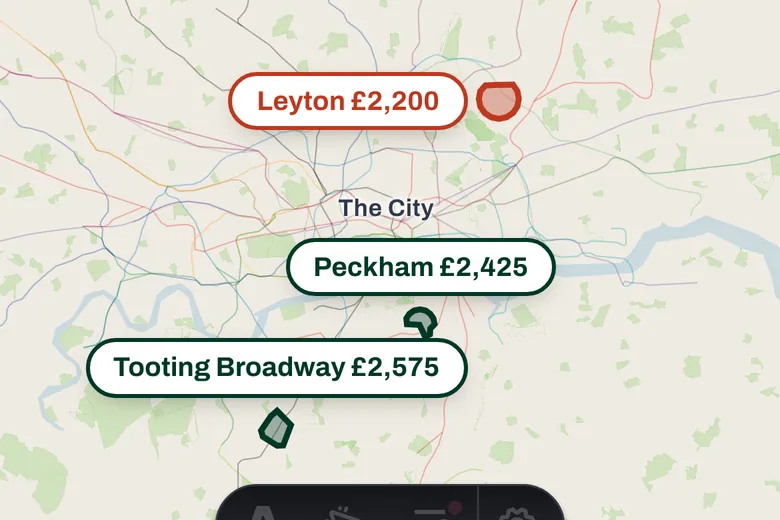
A 3.5% rise adds about £77 a month in Leyton and £90 in Tooting Broadway.
A 3.5% rise adds £85 a month on a typical 2-bed in Peckham, £77 in Leyton and £90 in Tooting Broadway
4For landlords
You raise rent with one form and one start date, and a tenancy agreement clause cannot do the job for you.
- Use Form 4A, with at least two months between serving it and the start date. Serve it in person, by post, or by email only if the tenancy allows email, and keep proof of the day.
- Choose a start date at least 52 weeks after the tenancy began or after the last rise, and never in the first 12 months.
- Do not rely on a rent review clause. Since 1 May 2026 rent rises only by notice, by an agreement that follows a notice, or by a tribunal decision.
- Check the figure against the market before you send it. If the tenant applies, the new rent is the lower of the market rent and your proposal, and it can start up to two months late if the tenant would face undue hardship.
- A section 13 notice and a section 8 notice are separate processes. A rise does not end a tenancy, and the section 21 guide covers how a tenancy now ends. The how to raise rent guide gives a landlord's worked example.
If you are unsure whether the 1 May 2026 changes reach one of your tenancies, ask Shelter, Citizens Advice or a solicitor. The Renters' Rights Act guide lists the other rules that changed on the same day.
What else do people ask?
How much can a landlord raise the rent?
Section 13 sets no percentage limit: the notice can propose any figure. The protection is that you can apply to the First-tier Tribunal before the new rent starts, and it sets the open market rent for your home, never more than the landlord asked for. The ONS 3.5% London average is a yardstick and not a cap.
How much notice does a landlord have to give for a rent increase?
At least two months, on Form 4A (GOV.UK). The new rent cannot start earlier than the notice says, and it cannot start before 52 weeks have passed since the tenancy began or since the last rise.
How often can a landlord raise the rent?
Once a year. The new rent cannot take effect in the first 12 months of a tenancy, and after a rise the next one has to wait 52 weeks, with one 53-week case in section 13(3B).
Can a landlord put the rent up using a clause in the tenancy agreement?
No. Section 13(4A) says rent can rise only by a section 13 notice, an agreement that follows such a notice, or a tribunal decision, and a term that says otherwise has no effect.
Can we agree a new rent without a notice?
Before the new rent starts, you can agree a lower rent than the one on the notice, or agree that the rent does not change (section 13(4)(b)). An agreed rent above the notice has no effect: section 13(4A) lets rent rise only by a notice (or an agreement under (4)(b) that follows one) or a tribunal decision.
How do I challenge a rent increase?
Apply to the First-tier Tribunal on Form MR1 before the date the new rent is due to start. You can apply online, or send the form by post or email; the fee is £47, with none for a notice dated before 1 May 2026 or for a social rented home. The tribunal decides the open market rent for the same home, and the notice does not take effect while your application is waiting (section 13(4)).
How do I know if a rent increase notice is valid?
GOV.UK lists five points: the correct notice period (at least two months, or one month if the notice was given before 1 May 2026); no increase within 52 weeks of the last one or during a fixed-term tenancy; the correct start date; your correct name and address; and the correct form (Form 4A), signed by the landlord. If you only want to challenge validity, GOV.UK says to use the paper MR1 form.
What happens if I ignore a section 13 notice?
The new rent takes effect on the date in the notice unless, before that date, you apply to the tribunal or you and your landlord agree a lower rent or no rise (section 13(4)). A rent rise does not itself end a tenancy; the section 21 guide covers how a tenancy now ends.
Can the tribunal put my rent up higher than the landlord asked for?
No. Under section 14ZB(5) the new rent is the open-market rent if that is lower than the proposed rent, and otherwise the proposed rent.
What if I cannot afford the new rent from the date on the notice?
The tribunal can set a later start date if the new rent would cause undue hardship. That date must fall within two months of its decision (section 14ZB(3) and (4)).
Is a 3.5% rent rise normal in London?
It is the ONS figure for the average change in London private rents over the 12 months to September 2026, released on 21 October 2026. It is an average across all tenancies and not a cap, so a notice can propose more.
How did we work this out?
The figures, their dates and sources
Rules: read on 09/11/2026 on legislation.gov.uk (Housing Act 1988 sections 13, 14 and 14ZB as amended by the Renters' Rights Act 2025; Commencement No. 2 Regulations, SI 2026/421, regulations 2, 7 and 8). Regulation 2 brought the section 13, 14 and 14ZB changes into force on 1 May 2026 for assured tenancies outside social housing. Section 13(2)(a) says the new rent starts no earlier than two months after the notice is served. Section 14(A1) and (A2) let a tenant under an assured tenancy challenge the rent payable within six months of the tenancy beginning, unless a tribunal already set it.
Forms and fee: GOV.UK, "Apply for an open market rent determination" (updated 10 August 2026), gives the Form MR1 application, the £47 fee (none for a notice dated before 1 May 2026 or a social rented home), online, post or email, the start-date deadline and the five points of a valid notice. The rent increases guide for assured periodic tenancies (no date on the page) adds that a notice can be served by email only if the tenancy allows it. GOV.UK does not say when a notice counts as received.
Rents: the 3.5% is the ONS rise in London private rents in the 12 months to September 2026 (Price Index of Private Rents, released 21/10/2026, the latest on 09/11/2026; average London rent £2,338). It is an average, not a limit. The costs apply 3.5% to Citycomb's typical asking rent for a 2-bed (Mid finish, October 2026 listings) in the areas with at least 2 listings for a 2-bed, rounded to the nearest pound with halves up. The median area asks £2,225, so 3.5% is £78 a month; it is over £100 a month in 103 areas (a rent above £2,857) and under £70 in 143 (a rent under £2,000). Every area in the table rests on at least 16 listings, and the listing counts are shown. Bexleyheath (18 listings) asks £1,850, and 3.5% of that is £64.75, shown as £65. Addiscombe (42 listings) and Chadwell Heath (27) tie for the lowest typical 2-bed rent among areas with 16 or more listings, £1,725, so £60 is the low end of the hero figure; Mayfair asks the highest, £8,525, so £298 is the high end. Areas with fewer listings are left out of that range.
Examples: the Peckham notice, its dates (served 1 February 2027, rent due on the 1st, so earliest start 1 April 2027 and last day to apply 31 March 2027, as the date calculator counts them) and the £2,450 proposal are an example, not a real case. The £2,300 rent is chosen to show a rise that sounds large and still lands near the market.
Where do these figures come from?
- legislation.gov.uk: Housing Act 1988, section 13 as amended (increase of rent under assured periodic tenancies), 9 November 2026
- legislation.gov.uk: Housing Act 1988, section 14 as amended (determination of rent by the tribunal, including the six-month challenge in 14(A1) and (A2)), 9 November 2026
- legislation.gov.uk: Housing Act 1988, section 14ZB (tribunal's rent and undue hardship), 9 November 2026
- legislation.gov.uk: SI 2026/421, regulations 2, 7 and 8 (commencement, rent increases and notices before 1 May 2026), 9 November 2026
- GOV.UK: Renters' Rights Act overview for tenants (updated 01/05/2026), 9 November 2026
- GOV.UK: Assured periodic tenancies: a guide for tenants: Rent increases, 9 November 2026
- GOV.UK: Apply for an open market rent determination (Form MR1, updated 10/08/2026), 9 November 2026
- ONS: Private rent and house prices, UK: October 2026 (released 21/10/2026), 9 November 2026
- Citycomb area data, October 2026: typical 2-bed rents for London areas, 9 November 2026