Guide
Damp and mould repairs: what a landlord must fix in England
Checked 9 November 2026England onlyRules read 9 November 2026Rents: October 2026 asking rentsHow we worked it out
A landlord in England must keep a rented home in repair and fit to live in, but no law sets a number of days for private tenancies. A council has a new fine of up to £7,000 for a serious hazard that is not fixed, since 22 June 2026.
Written for: A London renter with damp or mould in a private rented home, or a landlord who has been told about it, in England.
£7,000the most the new council fine can be for a serious hazard such as severe damp or mould, in force since 22 June 2026; older powers allow up to £30,000
In short
You have found mould on a bedroom wall.
Photograph it, write to the landlord with a date to reply by, and go to the council if nothing happens; the steps and a copyable email come first.
The council's new fine of up to £7,000 is about three months' rent at £2,375 a month, the middle of the typical 2-bed rents across 327 London areas.
This guide is for private tenancies in England and was checked on 9 November 2026. This is general information, not legal advice; for your case, Shelter, Citizens Advice or a solicitor.
1What to do first about damp or mould
Record it, write to the landlord, ask for a date, and go to the council if nothing happens.
- Photograph each patch close up and from across the room, with the date on the picture. Add the likely source, such as a leaking pipe, a blocked gutter or a window that streams with water, and any belongings it has spoiled. Name the room in each file so an inspection can match it.
- Write to the landlord, send the photos and keep the reply. Keep paying rent.
- Ask for a date. GOV.UK says the landlord "should tell you when you can expect the repairs to be done" (GOV.UK repairs page).
- Let the landlord in to inspect. A tenant does not need medical evidence for a landlord to act with urgency on a health concern, GOV.UK's guidance says, but say if anyone at home has a breathing condition.
- If nothing happens, contact the environmental health department at your local council. GOV.UK says it "must take action if they think the problems could harm you or cause a nuisance". We found no source on how quickly a council replies, so we give no timescale.
Copy this into an email for steps 1 to 3, with your own details in the brackets: Hello, there is mould on the wall and ceiling of the [room] and a damp patch below the window. Photos taken on [date] are attached. Please tell me by [date, a week ahead] when someone will inspect it and when the work will be done. I am concerned about my health. Thank you, [name and address], [phone number].
2What the landlord must fix now
The landlord must keep the structure, exterior and the water, gas, electricity, heating and hot water installations in repair, and keep the home fit to live in.
Section 11 of the Landlord and Tenant Act 1985 covers the structure and exterior, including drains, gutters and external pipes, and the installations for water, gas, electricity, sanitation, heating and hot water. A leaking roof, a blocked gutter and a pipe leaking into a wall are the landlord's to repair.
Section 9A adds that the home must be fit for human habitation when the tenancy starts and stay fit while it lasts. It applies to tenancies granted on or after 20 March 2019, and to a periodic tenancy already running then from 20 March 2020 (2018 Act). It does not cover unfitness wholly or mainly down to the tenant's own breach of the tenancy, and a court can order the landlord to do the work (section 9A).
GOV.UK's damp and mould guidance, updated 1 April 2026, says: "While there is currently no legal requirement to undertake remedial work within a specific period of time, landlords should nonetheless respond to complaints about repairs promptly." It adds that it is "totally unreasonable to blame damp and mould in the home on 'lifestyle choices'", and that landlords should tackle the underlying cause as well as wiping off surface mould (GOV.UK guidance).
The council is the next step, and it has these powers:
| Power | What it does | Status |
|---|---|---|
| Improvement notice | Tells the landlord what work to do | Already in force |
| Prohibition order | Stops a home or part of it being used | Already in force |
| Work done and charged | The council does the work and bills the landlord | Already in force |
| Financial penalty | Up to £30,000, set by the council | Already in force |
| Quick fine | Up to £7,000, for a Category 1 hazard not fixed | From Monday 22 June 2026 |
The quick fine is for a landlord who does not fix a Category 1 hazard, one of 21 hazard types at the most serious level. The announcement of 21 June 2026 names damp and mould, and the updated hazard rating system that councils use came into force on Tuesday 23 June 2026. Its list of hazards starts with damp and mould growth (Table 3 of the consultation document).
3The rules by date
Repairs, fitness to live in and council fines apply to private landlords now; the Awaab's Law timescales and the new Decent Homes Standard do not.
Of the five dates, the 2019 fitness duty and the June 2026 council fines apply to private landlords now. Awaab's Law for private tenancies has no date.
Five damp and mould dates in England, and which apply to private landlords
Damp and mould rules, England
| Stop | Minutes from the start | Note |
|---|---|---|
| 20 Mar 2019 | Fit to live in, new lets | |
| 27 Oct 2025 | Awaab's Law, social only | |
| 22 Jun 2026 | Council fines start | |
| 18 Dec 2026 | Consultation closes | |
| 2035 | Decent Homes, private |
| Rule | Status | Source |
|---|---|---|
| Landlord repairs structure, exterior and installations | In force now | Landlord and Tenant Act 1985, section 11 |
| Home must be fit to live in and stay so | New tenancies from 20 March 2019; running periodic tenancies from 20 March 2020 | Section 9A and the 2018 Act |
| Councils can fine for a Category 1 hazard | In force from 22 June 2026 | GOV.UK announcement, 21 June 2026 |
| Section 21 notices can no longer be served | In force 1 May 2026 | Section 21 guide |
| Awaab's Law Phase 1, social landlords | In force 27 October 2025; social only | GOV.UK guidance |
| Awaab's Law Phase 2, social landlords | Starts 30 November 2026; social only | GOV.UK collection page |
| Awaab's Law, private tenancies | Announced; consultation closes 18 December 2026; not yet dated | GOV.UK consultation |
| New Decent Homes Standard, private homes | Due from 2035; regulations not yet dated | GOV.UK policy statement |
4What is announced and what is not yet law
Awaab's Law deadlines apply only to social landlords; for private tenancies the government is consulting on options and has set no date.
- number of days the law sets for private repairs today, says GOV.UK
- None
- working days to investigate: the options the consultation offers, with 10 the social rule
- 5 to 15
- 2026, when Phase 2 of Awaab's Law starts, for social landlords only
- 30 Nov
The consultation, published on 9 October 2026 and open until 11:59pm on 18 December 2026, asks how. For each step it lists the social timescale and one or two other options, and says there is a case for the social ones. The government has not said which it will choose, and it gives no date for its response or for any rule to start.
| Step | Social landlords, since 27 October 2025 | Options for private tenancies |
|---|---|---|
| Investigate a significant hazard | 10 working days | 5, 10 or 15 |
| Written summary to the tenant | 3 working days after | 1, 3 or 5 |
| Make a significant hazard safe | 5 working days after | 3, 5 or 10 |
| Emergency hazard | Within 24 hours | 12, 24 or 48 hours |
The social rules also say further works must start within 12 weeks; the table leaves that step out. A second phase for social landlords "will come into force on 30 November 2026", GOV.UK says, and extends the significant-hazard rules to a wider range of hazards, including excess cold, excess heat and falls on the level, but only for social landlords.
Say you email a landlord about black mould on Monday 16 November 2026. Whichever option were chosen, the investigation deadline would fall between 23 November and 7 December:
Under the social rule a landlord told on 16 November would have to investigate by 30 November; the options run from 23 November to 7 December.
Told on Monday 16 November 2026, the deadline to investigate would be 23 November, 30 November or 7 December, by option
| Landlord toldby email, with photos | Mon 16 Nov |
|---|---|
| Investigate within 5 working daysthe shortest option | Mon 23 Nov |
| Investigate within 10 working daysthe social landlord rule | Mon 30 Nov |
| Investigate within 15 working daysthe longest option | Mon 7 Dec |
| Make safe, 5 working days after a 10-day investigationthe social rule | Mon 7 Dec |
For a social landlord the 10 working days are law, and the calculator counts them from the day you tell the landlord, skipping weekends and bank holidays. It opens on Monday 16 November 2026, and shows the consultation's three options beside it.
When must the landlord act on damp and mould?
Monday 30 November 2026the latest day a social landlord can finish investigating a damp or mould hazard
- Landlord told (day zero)
- Monday 16 November 2026
- Investigate by, 10 working days
- Monday 30 November 2026
- Written summary by, 3 working days after the investigation
- Thursday 3 December 2026
- Make safe by, 5 working days after the investigation
- Monday 7 December 2026
This is the law for social landlords in England. Private landlords have no set timescale yet: the consultation (open until 18 December 2026) offers 5, 10 or 15 working days to investigate, which from this day would be Monday 23 November 2026, Monday 30 November 2026 or Monday 7 December 2026, and none is law.
A worked example: a landlord told of damp or mould on Monday 16 November 2026. Turn on JavaScript to type your own.
These are the deadlines in Awaab's Law for social landlords in England (the Hazards in Social Housing (Prescribed Requirements) (England) Regulations 2025, SI 2025/1042): 10 working days from the day after the landlord becomes aware to investigate a significant hazard, which includes damp and mould, a written summary within 3 working days of the investigation ending, safety work within 5 working days of it ending, and 24 hours for an emergency hazard. The dates shown are the latest ones, so an investigation that ends early brings the others forward. A working day is not a weekend, Christmas Day, Good Friday or a bank holiday in England and Wales (dates from GOV.UK, 2026 to 2028). Private landlords have no set timescale yet.
The consultation also says the Renters' Rights Act 2025 inserts a term into private tenancy agreements "mandating that the landlord complies with Awaab's Law", so a tenant could take a landlord to court for breach of contract. The private timescales are not set, so there is nothing to enforce yet under that term; a section 9A court claim is the route that works now. A complaint could also go to the new Private Rented Sector Landlord Ombudsman once it is established.
A new Decent Homes Standard is the other change. The government's policy statement, updated 28 January 2026, says it "will apply from 2035" to private rented homes; regulations are not yet dated.
5For tenants
Keep paying rent, keep the evidence, and use the council if the landlord does not act; moving is the last resort.
- Since 1 May 2026 the landlord cannot use section 21 to end your tenancy. A landlord can still ask a court for possession on a ground in section 8, and the section 21 guide lists the grounds.
- Shelter says not to stop paying rent over repairs, because you can be evicted for not paying. It suggests asking for a temporary rent reduction instead, which the landlord does not have to agree to.
- Shelter says you could ask for compensation, with up to 6 years to claim, or 3 years for a personal injury claim, running from when the landlord should have carried out the work. This page only reports Shelter; for a health claim check the shorter limit with a solicitor. For a section 9A claim, read Shelter on compensation and Citizens Advice on going to court, or contact a solicitor.
- If you do go, the guide to giving notice shows which day the tenancy ends, and the tenancy deposit guide covers what comes back.
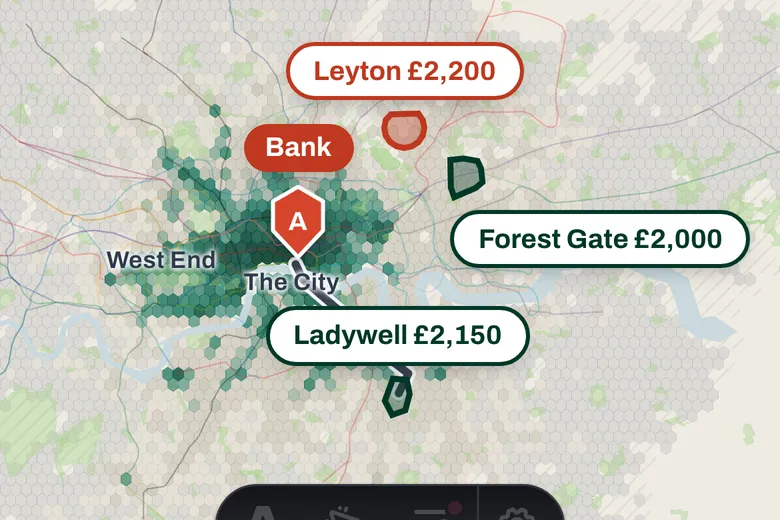
If you decide to move out of a damp flat, the map answers one question: where your own desk, total journey time and budget reach. It shows rent and journey time only, so it cannot say whether a flat is damp; the flat viewing checklist covers signs of damp. As an example, of the 327 London areas with more than 10 listings for a 2-bed, 20 ask £2,200 a month or less and are within 45 minutes total journey time of Bank, including Ladywell at £2,150, Leyton at £2,200 and Forest Gate at £2,000. Open the map on 2-beds up to £2,200 within 45 minutes of Bank, then set the desk, the minutes and the budget to your own.
Moving costs a first month's rent plus a deposit of up to 5 weeks' rent (the deposit cap guide has the rule). At those typical rents that is £4,308 in Forest Gate, £4,631 in Ladywell and £4,738 in Leyton, before bills, council tax and removals. The calculator opens on Ladywell and adds them; put in your own rent.
How much do you need to move in?
£5,013to have ready by moving day, first month's bills included
A worked example for £2,150 a month in Lewisham, Band D, with no removals or furniture. Turn on JavaScript to type your own.
A landlord can ask for one month's rent in advance and a deposit of up to 5 weeks' rent (6 when the rent is £50,000 a year or more). Bills are one month of energy (Ofgem's October to December 2026 cap), water (Thames Water, studio or 1 bed) and council tax (2026 to 2027, in 12 payments). Removals and furniture are your own figures; we add none.
Of the 327 London areas with more than 10 listings, 20 ask £2,200 or less for a 2-bed and are within 45 minutes of Bank.
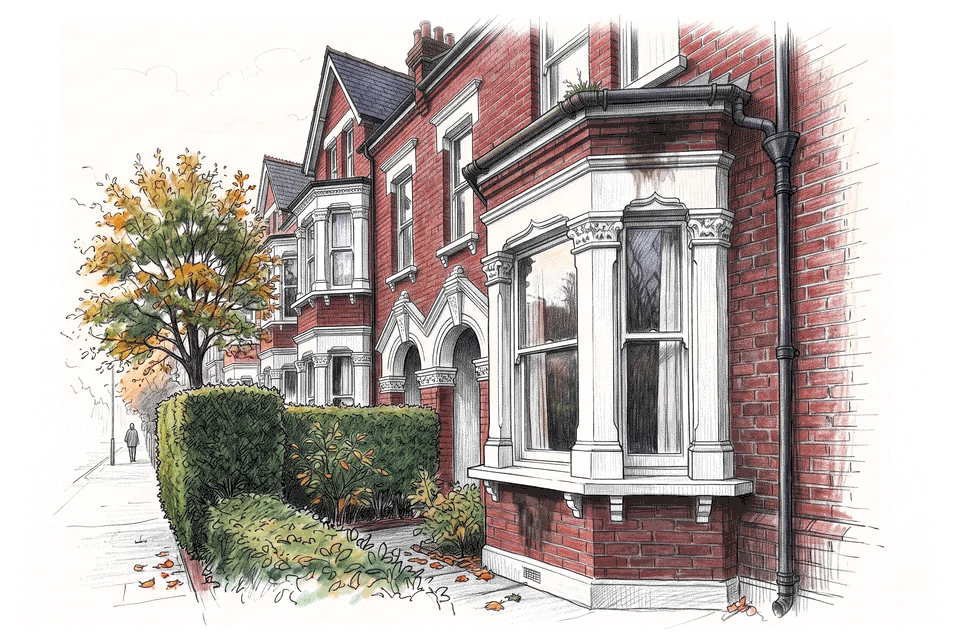
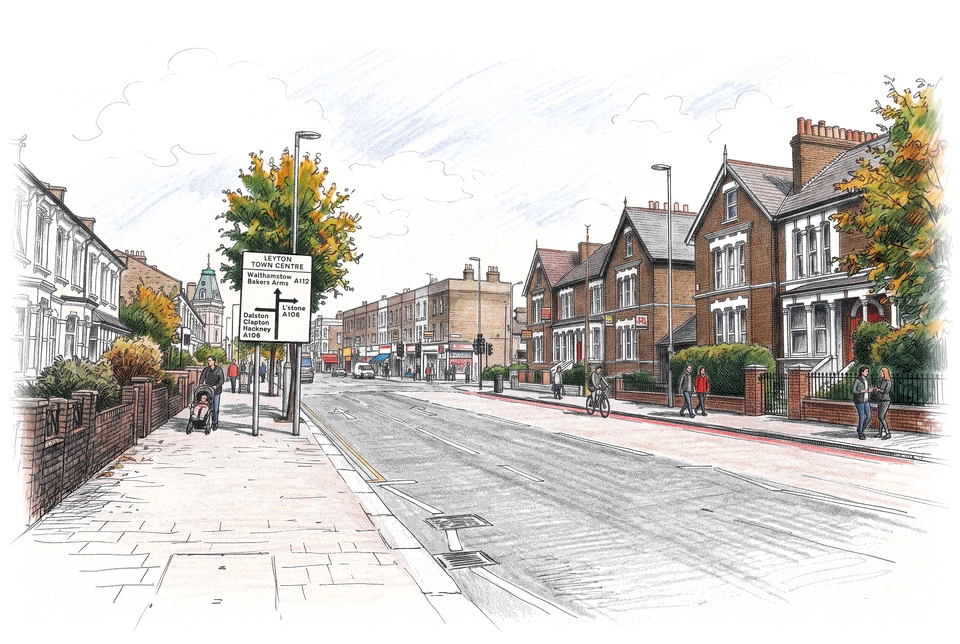
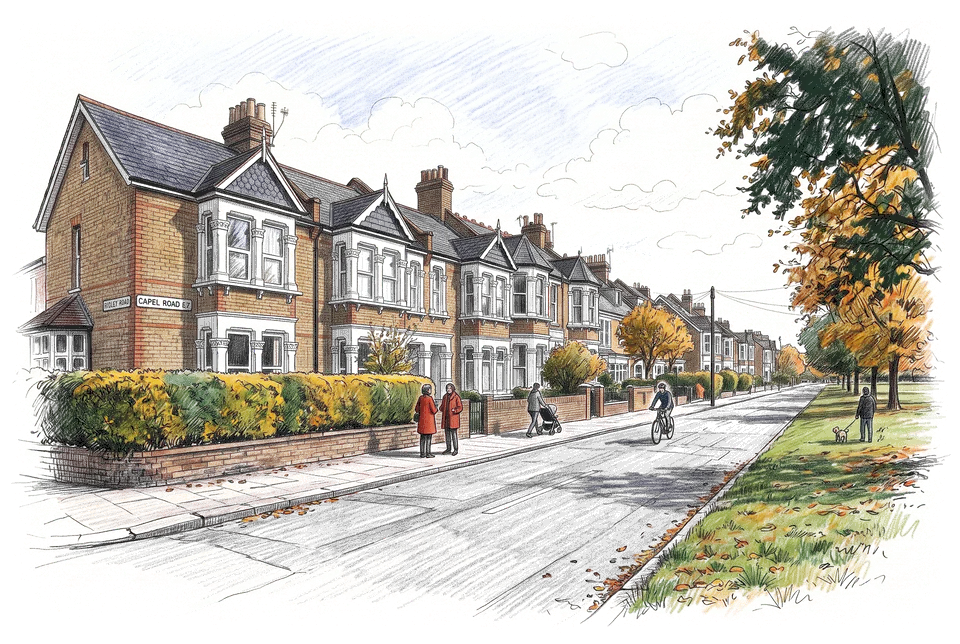
Three London areas where a typical 2-bed asks £2,200 or less and Bank is 45 minutes or less away
6For landlords
You have to repair the structure, exterior and installations, and keep the home fit to live in; GOV.UK says to respond to a repair complaint promptly.
- Inspect in person and write down the cause, then tackle the cause as well as the surface mould.
- Reply in writing with a date for the inspection and a date for the work, and photograph the problem before and after.
- A council can fine you for a Category 1 hazard you do not fix, from 22 June 2026, on top of its older powers in the table above.
- Consider working to the social timescales now: 10 working days to investigate, 5 more to make a significant hazard safe. The consultation (questions 11 and 18) lists them as one option among others, and no date is set.
- The new Decent Homes Standard is due to apply to private homes from 2035. The Renters' Rights Act guide lists the other rules that changed on 1 May 2026.
This is general information, not legal advice; for your case, a solicitor or a landlord association.
Citycomb holds no damp data for any building or area, so it cannot say whether a flat has damp. If you decide to move, the rent pages show typical rents by area.
What else do people ask?
Who is responsible for damp and mould in a rented flat?
The landlord is responsible for repairing the structure and exterior (section 11 of the Landlord and Tenant Act 1985) and for keeping the home fit to live in (section 9A). GOV.UK's damp and mould guidance says it is totally unreasonable to blame damp and mould on lifestyle choices. Section 9A does not cover unfitness that is wholly or mainly down to the tenant's own breach of the tenancy.
How long does a landlord have to fix damp and mould?
GOV.UK says there is currently no legal requirement to do repairs within a specific period, and that landlords should respond promptly. For social landlords Awaab's Law has set 10 working days to investigate a significant hazard since 27 October 2025, and a second phase starts on 30 November 2026. For private tenancies the government has announced it will extend the law and is consulting on the timescales, with no start date.
Does Awaab's Law apply to private renters?
Not yet. The consultation on extending it to private rented tenancies was published on 9 October 2026 and closes at 11:59pm on 18 December 2026. It offers options for each timescale and gives no date for the government's response or for the rules to start.
Can the council fine a landlord for damp and mould?
Since Monday 22 June 2026 a council can fine a landlord up to £7,000 for a serious hazard, at the most serious level, Category 1, in a rented home. The government's announcement names severe damp and mould, and the fine is for a landlord who does not fix such a hazard. It sits alongside the council's older powers, an improvement notice and a prohibition order, so contact the council's environmental health team.
Can I be evicted for complaining about damp?
Since 1 May 2026 a landlord in England cannot serve a section 21 notice, so a notice that needs no reason has ended. A landlord can still ask for possession on a ground in section 8, and a court decides, so the answer is not a flat no. The section 21 guide lists the grounds.
Can I withhold rent or claim compensation for damp and mould?
Shelter says you should not stop paying rent if your landlord does not do repairs, because you can be evicted for not paying. You can ask for a temporary rent reduction, which the landlord does not have to agree to. You could also ask for compensation: Shelter says you have up to 6 years to claim, or 3 years for a personal injury claim, and the time runs from when the landlord should have carried out the work. This page only reports Shelter. Read Shelter on withholding rent, Shelter on compensation and Citizens Advice on going to court.
Is condensation damp the landlord's to fix?
This page does not separate the causes of damp. GOV.UK's guidance says it is totally unreasonable to blame damp and mould on lifestyle choices and that landlords should tackle the underlying cause, not only wipe off surface mould. Section 9A excuses a landlord only for unfitness wholly or mainly down to the tenant's own breach of the tenancy. Whether your case is the landlord's to fix depends on its cause, so for your case ask Shelter, Citizens Advice or a solicitor.
What do I do if the landlord does nothing?
Put the problem in writing with dated photos, then contact the environmental health department at your local council, which GOV.UK says must take action if it thinks the problems could harm you or cause a nuisance. For a court claim or advice on your own case, contact Shelter, Citizens Advice or a solicitor.
How did we work this out?
The figures, their dates and sources
Rules were read on 09/11/2026 on legislation.gov.uk (Landlord and Tenant Act 1985, section 11, repairs, and section 9A, fitness for human habitation; Homes (Fitness for Human Habitation) Act 2018, for when section 9A applies to which tenancy; Renters' Rights Act 2025, section 100, the Decent Homes Standard power, shown as in force "for specified purposes" on 27 December 2025 and 22 June 2026) and on GOV.UK (the damp and mould guidance for housing providers, updated 01/04/2026; the repairs page in the private renting guide, which shows no update date; the announcement of 21/06/2026 headed "Crackdown on dangerous rented homes as new £7k fines kick in", that councils can fine up to £7,000 from Monday 22 June 2026 and that the updated hazard rating system comes into force on Tuesday 23 June; the Awaab's Law guidance for social landlords, Phase 1 in force 27/10/2025, and the collection page (published 13/07/2026, with no update date) that says Phase 2 "will come into force on 30 November 2026"; the consultation "Extending Awaab's Law to private rented tenancies and to licences", published 09/10/2026 and closing 11:59pm on 18/12/2026; and the Decent Homes Standard policy statement, updated 28/01/2026). That a hazard called "damp and mould growth" is listed comes from Table 3 of the consultation document, "HHSRS Hazards (from 23 June 2026)". The £30,000 council penalty is from the GOV.UK damp and mould guidance, which says a council can set "a financial penalty of up to £30,000" under the Housing Act 2004.
The consultation offers options and does not say which the government will choose: for each step it lists the social landlord timescale and one or two others, and it says there is "a case for" some of the social ones. The worked dates here are an example of each option, with no real case behind them and no forecast. We found no date for the government's response or for any private rule to start. The consultation says the Renters' Rights Act 2025 inserts a term into private tenancies "mandating that the landlord complies with Awaab's Law", but as the private timescales are not set there is nothing yet to enforce under it.
Compensation and rent withholding come from three advice pages read on 09/11/2026: Shelter England on withholding rent for repairs, Shelter England on compensation for poor repairs and conditions (last updated 27/10/2025, "You have up to 6 years to claim or 3 years for a personal injury claim. The time runs from when your landlord should have carried out the work"), and Citizens Advice on going to court if your landlord will not do repairs. We did not check how long a court takes or how quickly a council replies, so the page gives no timescale for either.
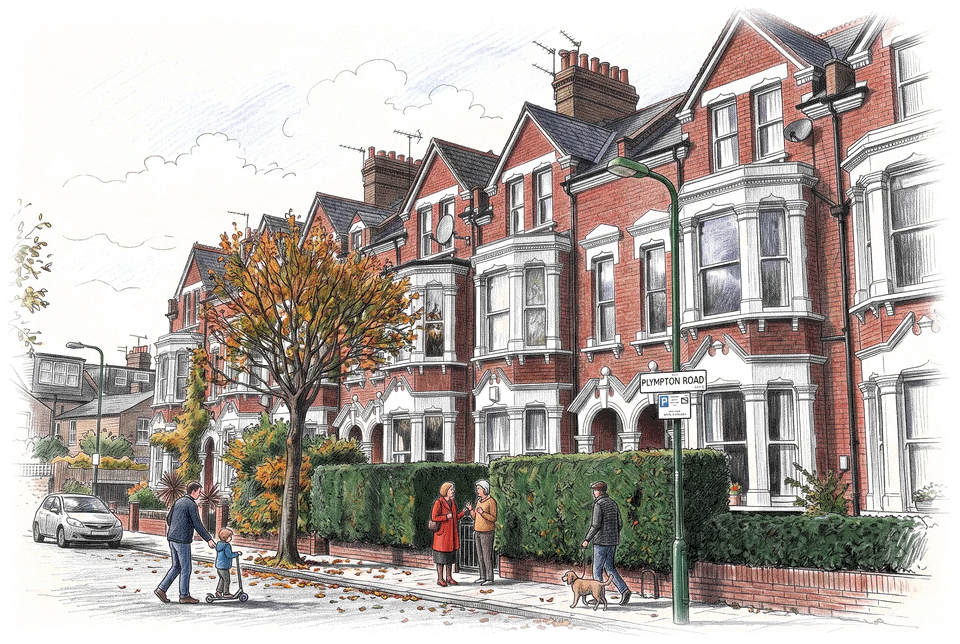
Citycomb holds no damp data for any building or area. The rents are typical asking rents for a mid-standard flat (the "Mid" finish) from October 2026 listings. The £2,375 is the median of the 327 areas' typical 2-bed rents, and £7,000 divided by it is 2.95 months. The counts use the 327 London areas with more than 10 listings for a 2-bed. Areas with 10 or fewer listings are left out. Of those 327 areas, 20 ask £2,200 or less for a 2-bed and are within 45 minutes total journey time of Bank on a weekday 09:00 arrival. The area figures are Ladywell £2,150 from 16 listings and 39 minutes, Leyton £2,200 from 28 and 44 minutes, Forest Gate £2,000 from 22 and 36 minutes, and Sydenham £1,900 from 16 and 45 minutes. The map card and the three drawings in the middle of the page show Ladywell, Leyton and Forest Gate; the link opens every area that passes. The map shows rents and journey times only; Citycomb has no damp data.
Where do these figures come from?
- legislation.gov.uk: Landlord and Tenant Act 1985, section 11 (repairing obligations in short leases), 9 November 2026
- legislation.gov.uk: Landlord and Tenant Act 1985, section 9A (fitness for human habitation of dwellings in England), 9 November 2026
- legislation.gov.uk: Homes (Fitness for Human Habitation) Act 2018, 9 November 2026
- legislation.gov.uk: Renters' Rights Act 2025, section 100 (decent homes standard), 9 November 2026
- GOV.UK: Understanding and addressing the health risks of damp and mould in the home (updated 01/04/2026), 9 November 2026
- GOV.UK: Repairs in private renting (no update date shown), 9 November 2026
- GOV.UK: Crackdown on dangerous rented homes as new £7k fines kick in (21/06/2026), 9 November 2026
- GOV.UK: Awaab's Law in the social rented sector (collection published 13/07/2026: Phase 1 in force 27/10/2025, Phase 2 from 30/11/2026), 9 November 2026
- legislation.gov.uk: Tenant Fees Act 2019, Schedule 1 (permitted payments; tenancy deposits, paragraph 2), 9 November 2026
- Shelter England: Withholding rent for repairs, 9 November 2026
- Shelter England: Compensation for poor repairs and conditions (last updated 27/10/2025), 9 November 2026
- Citizens Advice: Going to court if your landlord won't do repairs, 9 November 2026
- GOV.UK: Extending Awaab's Law to private rented tenancies and to licences (consultation, published 09/10/2026, closes 18/12/2026), 9 November 2026
- GOV.UK: Extending Awaab's Law to private rented tenancies and to licences, consultation document (questions 11, 15, 18 and 23; Table 3, HHSRS hazards from 23 June 2026), 9 November 2026
- GOV.UK: The New Decent Homes Standard, policy statement (updated 28/01/2026), 9 November 2026
- Citycomb area data, October 2026: typical 2-bed rents across London's areas, 9 November 2026