Guide
Tenancy deposit cap: five or six weeks' rent
Checked 9 November 2026England onlyRules read 9 November 2026Rents: October 2026 asking rentsHow we worked it out
The cap is five weeks' rent when the annual rent is under £50,000 and six weeks from £50,000, with a week as the annual rent divided by 52. On £2,200 a month in Leyton that is £2,538.46. The middle Zone 6 area caps a 2-bed at £2,163 and the middle Zone 1 area at £5,815.
Written for: A London renter about to pay a tenancy deposit, or a landlord or agent setting one, in England.
5 weeksof rent is the most a deposit can be in England, six weeks from £50,000 a year
In short
The most a landlord can ask for is five weeks' rent, or six weeks from £50,000 a year.
Crossing that line adds £962.77 to the cap.
This is general information, not legal advice; for your case, Shelter, Citizens Advice or a solicitor. It is for England; which tenancies the cap covers is under "Deposit cap rules in force in England".
1The £50,000 line: five weeks or six
Schedule 1, paragraph 2(3): "if the amount of the tenancy deposit exceeds ... the amount of five weeks' rent, where the annual rent ... is less than £50,000, or ... the amount of six weeks' rent, where the annual rent ... is £50,000 or more, the amount of the excess is a prohibited payment."
- the jump in the cap between £4,166 and £4,167 a month
- £962.77
- the cap on a £2,200 a month flat
- £2,538.46
- of London's areas have a typical 2-bed at £4,167 or more
- 20
So the cap is five weeks' rent when the annual rent is under £50,000, which is £4,166 a month or less, and six weeks when it is £50,000 or more. A week is the annual rent divided by 52 (paragraph 2(4)(c)).
Take a flat at £4,166 a month and a flat at £4,167. The first has an annual rent of £49,992, so the cap is five weeks and comes to £4,806.92. The second has an annual rent of £50,004, so the cap is six weeks and comes to £5,769.69. That is £1 more rent a month and £962.77 more deposit.
At £4,167 a month the cap becomes six weeks, £962.77 higher.
A flat at £4,167 a month has a deposit cap £962.77 higher than one at £4,166
| £4,166 a month, five weeks£49,992 a year, a week is £961.38 | £4,806.92 |
|---|---|
| £4,167 a month, six weeks£50,004 a year, a week is £961.62 | £5,769.69 |
| Difference in the cap | £962.77 |
| Monthly rent | Weeks | Deposit cap |
|---|---|---|
| £800 | 5 | £923.08 |
| £1,000 | 5 | £1,153.85 |
| £1,500 | 5 | £1,730.77 |
| £2,000 | 5 | £2,307.69 |
| £2,500 | 5 | £2,884.62 |
| £3,000 | 5 | £3,461.54 |
| £3,500 | 5 | £4,038.46 |
| £4,000 | 5 | £4,615.38 |
| £4,166 | 5 | £4,806.92 |
| £4,167 | 6 | £5,769.69 |
| £4,500 | 6 | £6,230.77 |
| £5,000 | 6 | £6,923.08 |
The same sum for any rent, starting at the £4,167 line:
What is the most deposit a landlord can ask for?
A worked example for £4,167 a month. Turn on JavaScript to type your own.
The Tenant Fees Act 2019 caps a tenancy deposit at 5 weeks' rent, or 6 weeks when the rent is £50,000 a year or more, and a holding deposit at 1 week's rent. One week is the annual rent divided by 52.
The calculator rounds to whole pounds, so £5,769.69 shows as £5,770.
Of Citycomb's areas, 20 have a typical 2-bed at £4,167 a month or more. In Zone 1 the line is close. The middle area, Oval, asks £4,200, which is £50,400 a year, so six weeks: £5,815.38. The next area down asks £4,050, a week of £934.62 and a five-week cap of £4,673.08, which is £1,142.31 less. The dearest area below the line is Notting Hill at £4,075, where five weeks is £4,701.92.
Above £100,000 a year, about £8,333 a month, GOV.UK says the Tenant Fees Act does not apply and names no cap. Mayfair's typical 2-bed is above that line, so get advice before you pay a deposit on a rent like that.
2Working out the cap on your rent
A week's rent is the annual rent divided by 52, and the cap is five or six of those weeks.
That is slightly different from a month divided by four. The annual rent is the rent immediately after the tenancy is granted, renewed or continued (Schedule 1, paragraph 2(4)(c)). In Leyton a typical 2-bed (Mid finish) asks £2,200 a month, so the annual rent is £26,400, a week is £507.69 and five weeks is £2,538.46. Across every finish the median Leyton 2-bed is £1,875, from 28 listings, which would cap a deposit at £2,163.46; the £2,200 is the Mid figure.
A week is the annual rent divided by 52, which makes the cap £2,538.46 on £2,200 a month.
Counting a week as a quarter of a month puts the cap £211.54 too high on a £2,200 flat
| Annual rent£2,200 x 12 | £26,400.00 |
|---|---|
| One week's rent£26,400 / 52 | £507.69 |
| Five weeks, the cap£507.69 x 5 | £2,538.46 |
| The shortcut£2,200 x 1.25, a week as a quarter of a month | £2,750.00 |
| Over the cap by | £211.54 |
Cash on signing day is the first month's rent plus the deposit: £2,200 plus £2,538.46 is £4,738.46. It leaves out bills, council tax, removals and furniture. A holding deposit has its own cap of one week's rent, £507.69 on this flat. If you agree in writing that it counts towards the deposit or the first month, you will already have paid it, which leaves £4,230.77 to find on the day. Under Schedule 2, paragraph 7 of the Act, an amount applied to the deposit is treated as received on the date of the tenancy agreement, so the 30-day protection clock starts then; the holding deposit guide has the rules.
To see Leyton on the map, open 2-beds at a £2,300 budget with a 45-minute total journey time to Bank, click Leyton and read £2,200 a month; times 12, divided by 52, times 5, is the £2,538.46 above.
3The cap on a London 2-bed
The middle Zone 1 area has a typical 2-bed at £4,200 a month, £50,400 a year, so its cap is six weeks, £5,815.
In the middle Zone 6 area a 2-bed is £1,875 a month and the cap is five weeks, £2,163. Zones 2 to 5 sit between, and none of their middle areas reaches £50,000 a year.
Take the areas whose typical 2-bed is under £100,000 a year. The median area has a £2,200 2-bed and a cap of £2,538. In 246 of the areas the cap is under £2,500 and in 251 it is £2,500 or more.
These are ceilings from advertised rents, and a landlord can ask for less. For four areas, the cap on a typical 2-bed:
| Area | Typical 2-bed | Deposit cap |
|---|---|---|
| Catford | £1,850 | £2,134.62 |
| Leyton | £2,200 | £2,538.46 |
| Peckham | £2,425 | £2,798.08 |
| Kentish Town | £3,225 | £3,721.15 |
Between Catford and Kentish Town the cap differs by £1,587, which is the extra cash a Kentish Town tenant has to find on the day before the first month's rent. The affordability guide sets rent and deposit against a salary, and the 2-bed under £2,500 page lists areas by rent.
The page cannot know your workplace or your budget; the map does. The link below opens it on Leyton, with 2-beds at a £3,300 budget.
Among these four areas, the cap on a typical 2-bed runs from £2,135 in Catford to £3,721 in Kentish Town.
Catford, Leyton, Peckham and Kentish Town cap a 2-bed deposit at £2,135, £2,538, £2,798 and £3,721
4Deposit cap rules in force in England
All rows were checked on legislation.gov.uk and GOV.UK on 9 November 2026.
The Tenant Fees Act applies to assured periodic tenancies, student accommodation and licences to occupy housing such as a lodger's room, and not to social housing assured tenancies, shared ownership, holiday lets, excluded licences or a rent over £100,000 a year (GOV.UK landlord guidance, updated 7 July 2026). The GOV.UK deposit protection pages show no update date.
| Rule | In force | Source |
|---|---|---|
| A tenancy deposit is capped at five weeks' rent under £50,000 a year and six weeks from £50,000 | 1 June 2019 | Tenant Fees Act 2019, Schedule 1, para 2(3) and (4); SI 2019/857 |
| The excess over the cap is a prohibited payment | 1 June 2019 | Schedule 1, para 2(3) |
| The deposit must be dealt with under an authorised scheme from the time it is received, and the scheme's initial requirements met within 30 days beginning with the day it is received | In force; the 30 days since 6 April 2012; "assured" wording from 1 May 2026 "for specified purposes", which purposes is not stated | Housing Act 2004, s.213(1) and (3); Localism Act 2011; SI 2026/421 |
| The landlord gives the tenant (and whoever paid) the prescribed information within the same 30 days | In force; same dates | Housing Act 2004, s.213(5) and (6) |
| The deposit is returned within 10 days of you both agreeing how much comes back | GOV.UK guidance; no statutory date found | GOV.UK deposit protection |
| If it was never protected, the court's orders: repayment or payment into a scheme within 14 days, and one to three times the deposit | In force; "assured" wording from 1 May 2026 "for specified purposes" | Housing Act 2004, s.214(2) to (4); detail under "If the deposit was never protected" |
| A rent rise is a separate process | See the section 13 guide | Section 13 guide |
A holding deposit does not need protecting while it is a holding deposit. GOV.UK says that once you become a tenant it becomes a deposit, which the landlord must protect, and Schedule 2, paragraph 7 of the Tenant Fees Act treats an amount applied to the deposit as received on the date of the tenancy agreement.
5If the deposit was never protected
Housing Act 2004, section 213(3): the scheme's requirements must be met "within the period of 30 days beginning with the date on which it is received".
If that did not happen:
- Ask the scheme whether your deposit is registered. GOV.UK lists the three schemes' contact details.
- Write to the landlord first, with the amount and the date you paid. It can be quicker and cheaper than court, and you do not need a solicitor, though GOV.UK advises getting legal advice before you apply.
- If that fails, apply to the county court on Form N208. The fee is £387, which you can claim back if you win.
- The court's orders depend on whether the tenancy has ended (Housing Act 2004, section 214). While it is still running, the court must order the landlord to repay the deposit or pay it into a scheme within 14 days (section 214(2) and (3)). Once it has ended, the court may order repayment of all or part within 14 days (section 214(2A) and (3A)).
- Either way, the court must order the landlord to pay you between one and three times the deposit (section 214(4)). On £2,538.46 that is £2,538.46 to £7,615.38. GOV.UK says the court "can" make these orders and puts the top figure as up to 3 times.
The sum climbs quickly with the rent: Pimlico at £3,600 a month has a five-week cap of £4,154, and Oval at £4,200 has a six-week cap of £5,815.
6For tenants
Before you pay, ask the agent for the weekly rent and the number of weeks the deposit is.
You could write: "Before I pay, please confirm the weekly rent and that the deposit is £2,538.46, five weeks of £2,200 a month. Please also tell me which scheme will protect it."
Moving day is when the money is easiest to hand over and hardest to check. Take a tenant signing for a 2-bed in Leyton at £2,200 a month, who pays a deposit of £2,538.46 on Thursday 3 December 2026. The dates run like this:
- Thursday 3 December 2026: you pay; this is day 1 of the 30.
- Friday 1 January 2027: the last day for the landlord to protect it and send the scheme details (Housing Act 2004, section 213(3) and (6)).
- Friday 4 June 2027: the tenancy ends and you both agree what comes back.
- Monday 14 June 2027: the latest return under GOV.UK's 10 days, which is GOV.UK's wording and not a date in the sections of the Act quoted here.
Paid on 3 December, the deposit must be protected by 1 January.
Paid on 3 December 2026, a deposit must be protected by 1 January 2027
| You pay the depositday 1 of the 30 | Thu 3 Dec 2026 |
|---|---|
| Landlord protects it and sends the detailsscheme, property, amount, who paid, reasons they might keep money | By Fri 1 Jan 2027 |
| Tenancy ends and you agree what comes back | Fri 4 Jun 2027 |
| Landlord returns it10 days; if you disagree it stays in the scheme until settled | By Mon 14 Jun 2027 |
- The deposit belongs in a scheme whoever pays it, including a parent.
- Keep the details the landlord sends.
- Photograph every wall, floor and appliance on the day you move in and the day you leave, and keep the inventory. If you disagree with a deduction, say so in writing and raise a dispute through the scheme.
- A fee for a pet is not on GOV.UK's list of permitted payments, so it cannot be charged on top; the renting with pets guide has the detail.
If the landlord asks for more than the cap, say £3,000 on the Leyton flat, which is £461.54 over, write: "Please correct the deposit to £2,538.46 or less before I sign. Under Schedule 1, paragraph 2(3) of the Tenant Fees Act the excess is a prohibited payment."
- If you have already paid, ask for the excess back in writing, with the amount and the date you paid.
- If it is not repaid, GOV.UK says you can report it to your local council or apply to the First-tier Tribunal, which can order a prohibited payment repaid.
- If a letting agent asked for it, GOV.UK also names two redress schemes for agents, The Property Ombudsman and Property Redress.
- For advice on your own case, Shelter or Citizens Advice.
7For landlords
Set the deposit at no more than five weeks of the rent, or six if the annual rent is £50,000 or more, using a week as the annual rent divided by 52.
Within 30 days of receiving the money you must:
- protect it in an approved scheme
- give the tenant the scheme details and the other information GOV.UK lists
The rest of the clock:
- Return it within 10 days of you and the tenant agreeing how much comes back. If you disagree it stays in the scheme until the dispute is settled.
- If you use a holding deposit towards the tenancy deposit, treat it as part of the deposit and protect it: paragraph 7 of Schedule 2 starts your 30 days on the date of the tenancy agreement. The holding deposit guide sets out when it must be repaid.
- A rent rise is a separate process: see the section 13 guide. The section 21 guide and the ending a tenancy guide cover the end of a tenancy.
The consequences, from GOV.UK and the Act:
- Asking for more than the cap: the excess is a prohibited payment. The first financial penalty can be up to £5,000, a breach within 5 years of a previous penalty can bring a penalty of up to £30,000 or a prosecution, and the tenant can apply to the First-tier Tribunal to have it repaid.
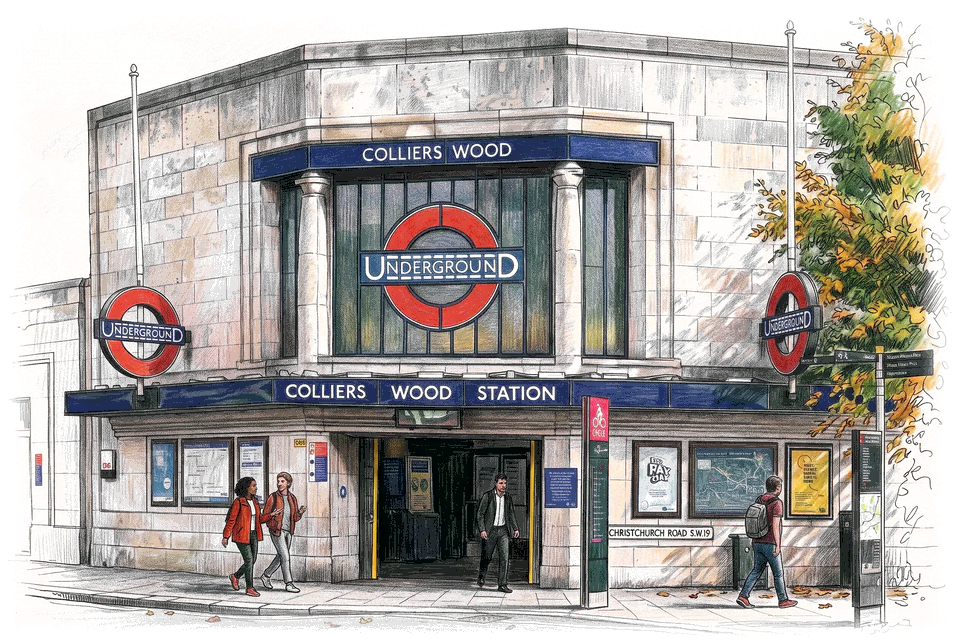
- Not protecting the deposit: the court's orders are set out under "If the deposit was never protected". In Colliers Wood, where a typical 2-bed asks £2,250 a month, five weeks is £2,596.15, so one to three times is £2,596.15 to £7,788.46.
What else do people ask?
How much deposit can a landlord ask for in England?
Five weeks' rent if the annual rent is under £50,000, and six weeks if it is £50,000 or more. A week is the annual rent divided by 52, so on £2,200 a month the most is £2,538.46.
Can a landlord ask for more than five weeks' deposit?
Not when the annual rent is under £50,000. Schedule 1, paragraph 2(3) of the Tenant Fees Act 2019 says the excess is a prohibited payment. Ask in writing for the figure to be corrected before you sign. On a £2,200 a month flat, a £3,000 deposit is £461.54 over the £2,538.46 cap.
How is a week's rent worked out for the deposit cap?
Multiply the monthly rent by 12, divide by 52 for one week, then multiply by five, or by six from £50,000 a year. Taking a week as a quarter of a month gives too high an answer: £2,750 against £2,538.46 on a £2,200 flat.
At what rent does the deposit cap become six weeks?
Five weeks below £50,000 a year, which is £4,166 a month or less. At £4,167 a month the annual rent is £50,004 and the cap becomes six weeks, £962.77 higher than the five-week cap at £4,166.
Does the deposit cap include the holding deposit?
A holding deposit is capped separately, at one week's rent. Once it is applied to the tenancy deposit, or becomes the deposit when you sign, it counts inside the five or six weeks, so the two together cannot go over the cap. If it goes towards the first month's rent instead, it is part of the rent. The holding deposit guide has the rules.
Is there a deposit cap on rent over £100,000 a year?
GOV.UK's landlord guidance says the Tenant Fees Act does not apply to a property with an annual rent of more than £100,000, so it gives no cap. That is about £8,333 a month. Get advice from Citizens Advice or Shelter before paying.
Where must my deposit be protected?
In a government-approved scheme if you rent on an assured periodic tenancy, which replaced assured shorthold tenancies on 1 May 2026. GOV.UK names the Deposit Protection Service, MyDeposits and the Tenancy Deposit Scheme. The landlord or agent has 30 days beginning with the day they receive the deposit to protect it and give you the details.
What if the landlord asks for more than the cap?
The excess is a prohibited payment. Ask for it to be corrected before you sign, or ask for it back in writing if you have paid. GOV.UK says you can report it to your local council or apply to the First-tier Tribunal, which can order it repaid. If an agent asked, you can also report them to The Property Ombudsman or Property Redress.
What if my landlord did not protect my deposit?
You can apply to the county court on Form N208, and the court must order the landlord to pay you one to three times the deposit. The steps and the court's other orders are under "If the deposit was never protected". The fee is £387, which you can claim back if you win.
How did we work this out?
The figures, their dates and sources
- Law read on 09/11/2026 (legislation.gov.uk and GOV.UK): the cap is Tenant Fees Act 2019, Schedule 1, paragraph 2, in force on 1 June 2019 (SI 2019/857, regulation 3). legislation.gov.uk records no amendment to paragraph 2.
- Protection: Housing Act 2004, section 213 (the scheme's initial requirements and the prescribed information, each within "30 days beginning with the date on which it is received", subsections (3) and (6)) and section 214 (the county court's orders, set out once under "If the deposit was never protected"). Tenant Fees Act 2019, Schedule 2, paragraph 7 treats a holding deposit applied to the deposit as received on the date of the tenancy agreement.
- Not guessed: in both sections the words "a shorthold" were replaced by "an assured" from 1 May 2026 "for specified purposes" (Renters' Rights Act 2025, section 26; SI 2026/421, regulation 2(a)). legislation.gov.uk does not say which purposes are still to start. The 30 days date from the Localism Act 2011 (in force 6 April 2012).
- GOV.UK: the Tenant Fees Act guidance for tenants and the guidance for landlords and agents on fees (both updated 07/07/2026) and the tenancy deposit protection pages. The landlord guidance says the Act does not apply to an annual rent over £100,000 and gives no cap for that, so the page quotes none.
- The 10 days to return a deposit are GOV.UK's wording, from the day both sides agree the sum; we found no date for it in the sections above.
- Not looked at: tenancies that are not assured periodic tenancies, or how a rent change after the grant affects the cap.
- One week's rent: the monthly rent times 12, divided by 52; the cap is five or six times that, rounded only at the end. A day count starts on the day the money is received, so 30 days from 3 December 2026 end on 1 January 2027.
- London rents: Citycomb's typical asking rent for a 2-bed (Mid finish) from listings seen between 8 and 14 October 2026 across areas. Mid is the middle of three finish tiers: Leyton's median across every finish is £1,875 on 28 listings, against £2,200 for Mid.
- How solid the rents are: typical 2-bed rents: 161 rest on fewer than 10 listings and 36 of those have one listing or none behind them and are modelled. The areas named in the text each rest on 16 or more listings (Peckham 16, Catford 24, Kentish Town 27, Leyton 28, Colliers Wood 36, Oval and Pimlico 51, Notting Hill 74).
- Rent bands: Almost every area is under £50,000 a year, a few are from £50,000 to £100,000 and one, Mayfair at £8,525 a month (£102,300 a year), is above £100,000. The median of the others is £2,200 a month, and about half of those have a cap under £2,500.
- Zone figures: each is the middle area's typical 2-bed rent among the areas whose nearest station within 2.5 km is in the zone (37 areas in Zone 1, 103 in Zone 2, 89 in Zone 3, 98 in Zone 4, 85 in Zone 5, 66 in Zone 6; 20 areas have no zone). The Zone 1 middle is Oval and Vauxhall at £4,200 a month, £50,400 a year, so it takes the six-week cap; the next area down asks £4,050.
- The example: the Leyton scene, its dates and the wording to send are an example, not a real case.
Where do these figures come from?
- legislation.gov.uk: Tenant Fees Act 2019, Schedule 1 (permitted payments; tenancy deposits, paragraph 2), 9 November 2026
- legislation.gov.uk: Tenant Fees Act 2019, Schedule 2 (holding deposits, paragraph 7), 9 November 2026
- legislation.gov.uk: Housing Act 2004, section 213 (requirements relating to tenancy deposits), 9 November 2026
- legislation.gov.uk: Housing Act 2004, section 214 (proceedings relating to tenancy deposits), 9 November 2026
- GOV.UK: Tenant Fees Act 2019, guidance for tenants (updated 07/07/2026), 9 November 2026
- GOV.UK: Fees you can charge as part of a tenancy, guidance for landlords and agents (updated 07/07/2026), 9 November 2026
- GOV.UK: Tenancy deposit protection (no update date shown), 9 November 2026
- GOV.UK: Information landlords must give tenants about the deposit (no update date shown), 9 November 2026
- GOV.UK: If your landlord does not protect your deposit (no update date shown), 9 November 2026
- Citycomb area data, October 2026: typical 2-bed rents across London's areas, 9 November 2026