Guide
No DSS ban in England
Checked 9 November 2026England onlyIn force 1 May 2026Rules read 9 November 2026How we worked it out
'No DSS' and 'no children' have been unlawful in England since 1 May 2026, and a council can fine a landlord who breaks the ban. A landlord can still set an income test, as long as it counts every source of income the same way.
Written for: A renter in England who has been told 'no DSS' or 'no children' on a flat, or a landlord or agent writing the rules for choosing a tenant.
77 of 327London areas where a typical 2-bed passes a test of 30 times the rent on £60,000 a year (an example multiple, not set by the Act)
In short
'No DSS' means no tenants on benefits (DSS is the old Department of Social Security, now part of the DWP), and it and 'no children' have been unlawful in England since 1 May 2026; a council can fine up to £7,000 a breach.
A landlord can still set an income test, as long as it counts every source of income the same way.
Take someone on part-time wages and Universal Credit who has booked a viewing for a flat at £2,000 a month. The agent asks for £60,000 a year, which is 30 times the rent, and says the Universal Credit won't count. A test that ignores benefit income is a breach; the same test counting it like wages is allowed. On Citycomb's rents the same test asks £71,250 a year for a typical 2-bed in the middle London area (£2,375 a month).
This guide is for England, and covers assured tenancies, which is most private lets, not social housing or supported accommodation (Renters' Rights Act 2025, section 42). It is general information, not legal advice; for your case, Shelter, Citizens Advice or a solicitor.
1What a landlord can no longer refuse
A landlord or agent can't block you at any step of a letting because you claim benefits or have children, and only children carry a defence.
Section 34 says a landlord or agent 'must not ... on the basis that a person is or may be a benefits claimant, prevent the person from' enquiring whether the home is available, getting information about it, viewing it or 'entering into a tenancy of the dwelling', and must not 'apply a provision, criterion or practice in order to make benefits claimants less likely to enter into a tenancy'. Section 33 does the same for children, with one defence. Shelter gives an advert that states 'No DSS' as an example of a breach, and GOV.UK says a website that only carries an advert isn't covered (section 34(3)). A benefits claimant includes someone entitled to a council tax reduction (section 42).
| Children (section 33) | Benefits (section 34) | |
|---|---|---|
| Defence | 'A proportionate means of achieving a legitimate aim' that benefits someone other than the landlord; money alone doesn't count | None: GOV.UK says no such exception is made for benefits claimants |
| Insurance | An older insurance contract that requires the ban can be a carve-out | Same carve-out (section 34(2)), for conduct as well as terms |
For children, GOV.UK says 'a financial aim alone, such as to lower business costs, is not legitimate'. Its examples of lawful restrictions include a retirement development and a student studio whose shared parts aren't safe for children.
A clause that bans children or claimants has no effect in a tenancy, a superior lease, a mortgage or an insurance contract (sections 35 to 38). The one carve-out for benefits is an insurance contract signed before 1 May 2026 and not extended since: it can still carry the ban until it is extended.
2What a landlord can still ask: income
On the £36,000 of wages in the example above, a typical 2-bed passes a 30-times test in none of the 327 London areas; once the £24,000 of Universal Credit counts, taking it to £60,000, it passes in 77.
The lowest test in London is Kenley's: a typical 2-bed asks £1,625 a month there (12 listings), so the test asks £48,750 a year, and then Addiscombe and Chadwell Heath at £1,725 a month, or £51,750. Nowhere passes on £40,000.
Section 41 says 'Nothing in this Chapter prohibits taking a person's income into account'. So a landlord can check affordability, as long as the test is the same for everyone and counts benefits like wages. GOV.UK says landlords 'should set the same income requirement for all prospective tenants and treat all forms of income equally', and 'should not unreasonably refuse to accept a means of evidencing income'. Its example of a breach is a referencing check that ignores benefit income, so a claimant fails a test that a wage-earner on the same income would pass.
The Act sets no multiple, so the figure is the landlord's own. We use 30 times the monthly rent as an example. On a £2,000 flat in Barking that is £60,000 a year, and wages, a pension and benefits all count towards it. Refusing an applicant who meets it because part of the income is a benefit is the breach.
How quickly a test of that size opens up the map depends on the income: the chart counts the London areas that pass at five of them.
The chart can't know your income or where you work; the map can. Open it on 2-beds with a £2,000 budget, which is £60,000 divided by 30, with a 45-minute journey to Bank, and it lights the areas that pass. Change the budget to your own income divided by 30 and the count changes with it.
Try the same test on your own figures. It opens on the example above with £36,000 of wages and £24,000 a year of Universal Credit: together they meet the £60,000 a landlord asking 30 times a £2,000 rent would want, but a check that left the Universal Credit out would see £24,000 short.
Does the income pass the test?
£60,000a year of income: 30 times a rent of £2,000 a month
- Income needed
- £60,000
- Your income, every source
- £60,000
- Of which benefits
- £24,000
The income meets the test, with every source counted the same way. Leaving the benefits out would show £24,000 short, and GOV.UK treats a check that ignores benefit income as a breach, which a council can fine up to £7,000 for (section 40).
A worked example: a test of 30 times a rent of £2,000 a month, against £36,000 of wages and £24,000 a year of benefits. Turn on JavaScript to type your own.
The Act sets no multiple: the figure is the landlord's own, and 30 times the monthly rent is an example. Section 41 of the Renters' Rights Act 2025 lets a landlord take income into account; GOV.UK says the requirement must be the same for every applicant and count every source of income equally, benefits and pensions included, and treats a check that ignores benefit income as a breach. England, assured tenancies, since 1 May 2026.
3What a breach costs
The council enforces the ban, not the tenant.
It can fine up to £7,000 for each breach (section 40), deciding on the balance of probabilities, which is a lower bar than the one for a crime. GOV.UK's penalty guidance gives £6,000 as the starting point, which a council can move for the facts of a case. On the Barking flat above, £7,000 is about three and a half months' rent.
A further penalty of the same size can follow if the conduct carries on more than 28 days after a penalty, or after an appeal is settled. A repeat breach of the same section within five years can add another. GOV.UK's penalty guidance says these stay civil penalties however often they happen. The guide to fines and penalties sets this beside the other rules a council can fine for.
Sections 33 to 41 came into force on 1 May 2026 (SI 2026/421, regulation 3(b)), for tenancies agreed before that date too (GOV.UK guidance for councils). Section 39, a power to ban other discriminatory practices by regulations, is in force too; we found no regulations made under it. The Renters' Rights Act guide lists the other 1 May changes.
4For tenants
You are told 'No DSS, sorry', or that the landlord 'doesn't take children'.
Keep the advert, message or call note with the date. GOV.UK asks tenants to send timestamped messages and dated copies of the advert, and says you needn't prove you have children or claim benefits.
Reply: 'Under section 34 of the Renters' Rights Act 2025, in force since 1 May 2026, a landlord or agent can't refuse or put off a tenant over benefits. What income do you require, and do you count benefit income the same way as wages? Please confirm in writing.' If the answer says benefits don't count, keep it: that is the breach GOV.UK describes.
- Report it to your local council. You can also use the agent's redress scheme or go to court, which can order an apology or compensation.
- If you have already paid a holding deposit and are then refused, the holding deposit guide says when it must be repaid.
- Discrimination is not one of the ten offences on GOV.UK's list for a rent repayment order, so that route isn't open for it. The guide to fines and penalties covers the offences where it is.
- For discrimination on other grounds, such as age or disability, GOV.UK points to the Equality Advisory and Support Service. A refusal over a pet is a separate rule, in the guide to renting with pets.
5For landlords
You can't turn away or discourage an applicant because of children or benefits, and an agent acting for you is covered by the same rules.
- Take 'No DSS' and 'no children' out of adverts, templates and instructions to agents.
- Use one written income requirement that counts every source of income the same way, and accept bank statements or benefit letters as evidence. Check that a referencing company or guarantor rule doesn't treat benefit income differently; the referencing guide shows what a check covers.
- Refuse a family only for a reason that benefits someone other than you and goes no further than it needs to. Cost alone is not one.
- Check your insurance. A contract signed before 1 May 2026 can keep a ban until it is extended or renewed, so ask your insurer for cover without it.
- The rental bidding guide covers what an advert may say about rent.
What else do people ask?
Can a landlord refuse tenants on benefits in England, or advertise 'No DSS'?
No. Since 1 May 2026, section 34 of the Renters' Rights Act 2025 bars a landlord or agent from stopping a benefits claimant enquiring, viewing or taking a tenancy, or from applying a policy that makes claimants less likely to take one. Shelter gives an advert that states 'No DSS' as an example of unlawful conduct, and GOV.UK says a website that only carries an advert is not covered. Benefits have no defence like the one for children; the carve-outs are narrow: an older insurance contract that requires the ban (section 34(2)) and conduct that only publishes an advert or passes messages between landlord and tenant (section 34(3)).
Can a landlord refuse tenants with children?
Only if refusing is 'a proportionate means of achieving a legitimate aim' (section 33). GOV.UK says someone other than the landlord must benefit, and that 'a financial aim alone, such as to lower business costs, is not legitimate'. Its examples of lawful restrictions include a retirement development and a student studio with shared parts that are not safe for children.
Can a landlord still check that I can afford the rent?
Yes. Section 41 says 'Nothing in this Chapter prohibits taking a person's income into account'. GOV.UK says the requirement has to be the same for everyone and count every source of income equally, benefits and pensions included, and it treats a referencing check that ignores benefit income as a breach. A landlord should accept reasonable evidence such as bank statements or a benefit letter.
How much can a council fine a landlord for discrimination?
Up to £7,000 for each breach (section 40), decided on the balance of probabilities. GOV.UK gives £6,000 as the starting point, which a council can move for the facts of a case. A further penalty of up to £7,000 can follow if the conduct continues more than 28 days after a penalty, and a repeat breach of the same section within five years can add up to £7,000 more.
How did we work this out?
The figures, their dates and sources
Rules were read on 09/11/2026 on legislation.gov.uk (the Renters' Rights Act 2025, Part 1, Chapter 3, sections 33 to 42, with each section's commencement note, and the Commencement No. 2 Regulations, SI 2026/421) and on GOV.UK (Rental discrimination under the Renters' Rights Act 2025, guidance for councils, updated 06/05/2026; Civil penalties under the Renters' Rights Act 2025 and other housing legislation, published 13/11/2025; Rent repayment orders, guidance for tenants, updated 01/05/2026). Shelter's page on rental discrimination, last updated 01/05/2026, is cited for the 'No DSS' advert example only. We did not check how a council sets an amount in practice, so the page gives the maximum and GOV.UK's starting point and not a likely figure. We did not check the Equality Act 2010, which covers other kinds of discrimination.
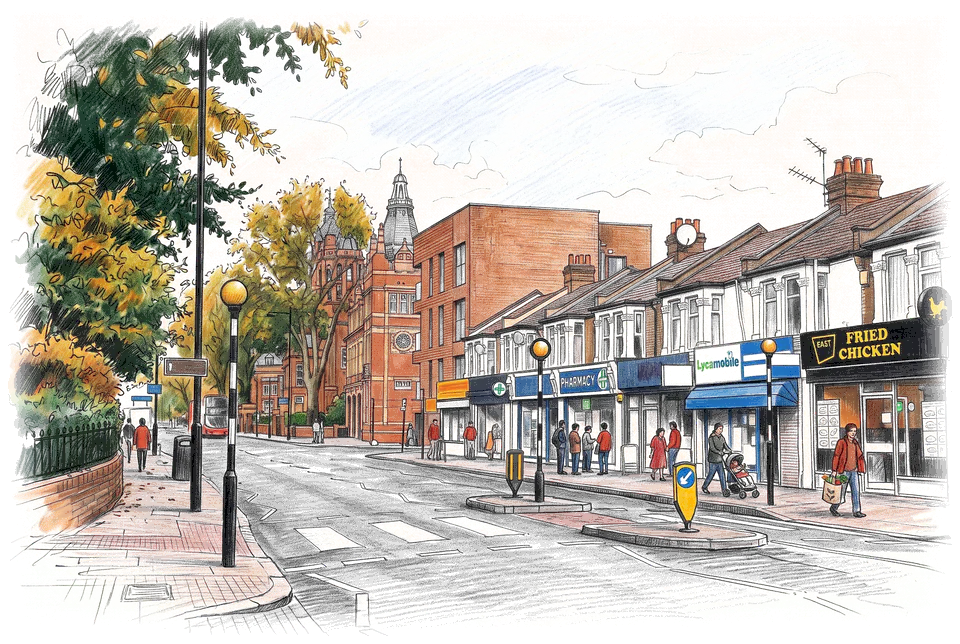
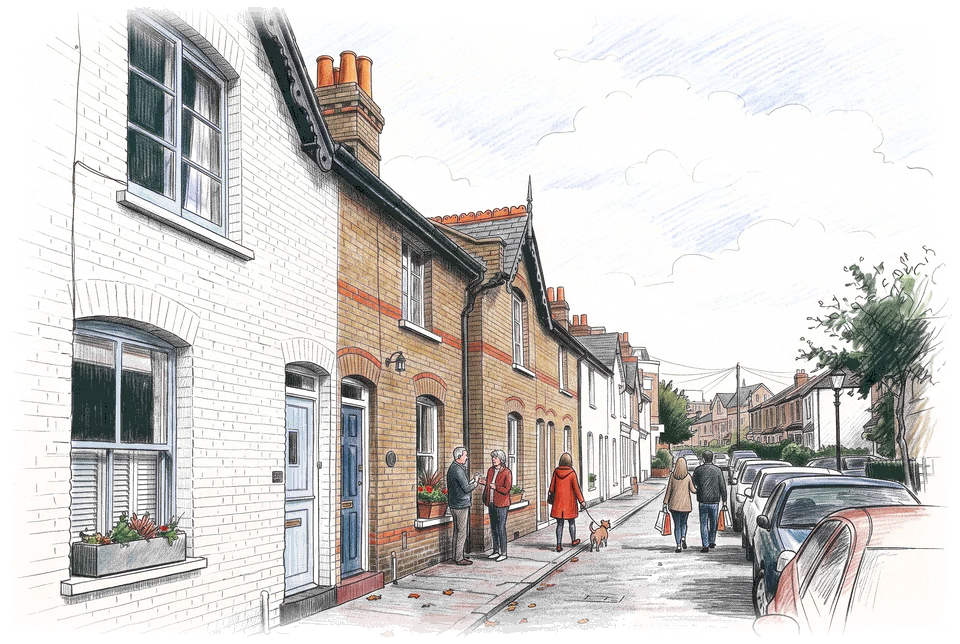
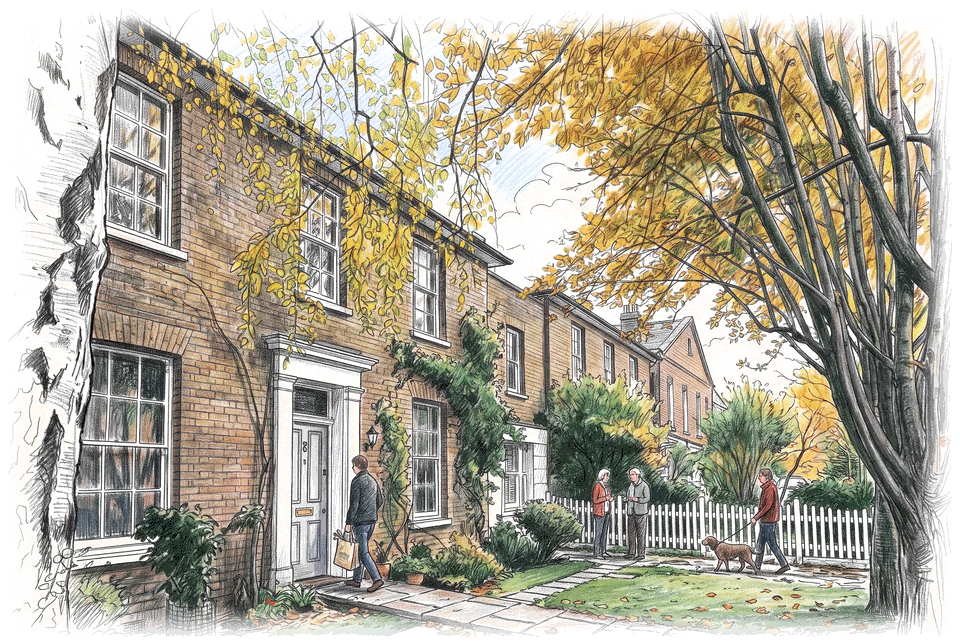
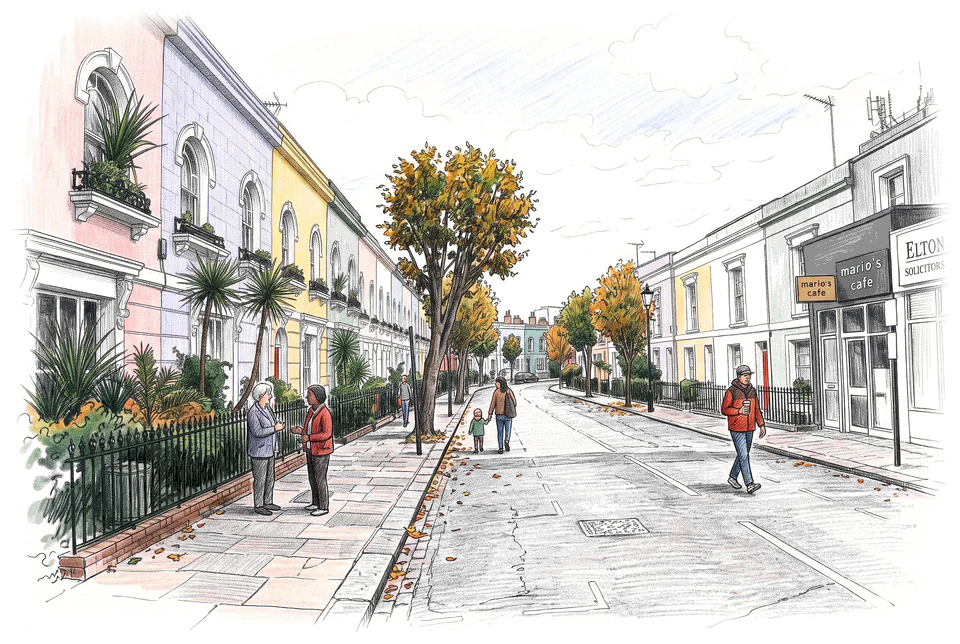
The income figures multiply Citycomb's typical 2-bed asking rent (Mid finish) from October 2026 listings by 30. The area count is the 327 London areas whose typical 2-bed rent rests on 11 or more listings (so not marked 'few listings'); an area passes a test when 30 times its typical monthly rent is at or under the income. Barking's £2,000 rests on more than 60 listings. Kenley's £1,625 rests on 12 listings, Addiscombe's £1,725 on 42 and Chadwell Heath's £1,725 on 27; no area passes on £36,000 or £40,000, so the 'none' in the income section is a count of zero out of 327. The middle London area's £2,375 is the median of the 327 typical rents. In the picture captions, East Ham's £1,950 rests on 14 listings, Wood Green's £2,450 and Beckenham's £1,975 rest on more than 60 listings, Kentish Town's £3,225 on 27 and Forest Gate's £2,000 on 22. The wording of sections 33 to 38, 40 and 41 is quoted from legislation.gov.uk as read on 09/11/2026. The multiple of 30 is an example for the sum, not a figure in the Act or a rule that every landlord uses. The figures show what a test would ask against a typical rent, not what any landlord or council has done, and the scenario at the top is an illustration, not a real case.
Where do these figures come from?
- legislation.gov.uk: Renters' Rights Act 2025, Part 1, Chapter 3 (discrimination, sections 33 to 42; in force 1 May 2026), 9 November 2026
- legislation.gov.uk: The Renters' Rights Act 2025 (Commencement No. 2 and Transitional and Saving Provisions) Regulations 2026 (SI 2026/421, reg. 3(b): the chapter in force 1 May 2026), 9 November 2026
- GOV.UK: Rental discrimination under the Renters' Rights Act 2025, guidance for councils (updated 06/05/2026), 9 November 2026
- GOV.UK: Civil penalties under the Renters' Rights Act 2025 and other housing legislation (published 13/11/2025), 9 November 2026
- GOV.UK: Rent repayment orders, guidance for tenants (updated 01/05/2026), 9 November 2026
- Shelter England: Rental discrimination (updated 01/05/2026), 9 November 2026
- Citycomb area data, October 2026: typical 2-bed rents for London areas, 9 November 2026