Guide
Moving from Dublin to London
Checked 10 November 2026ONS, September 2026ESRI and RTB, Q1 2026Public listings, 24/10/2026How we worked it out
London's average rent is about £420 a month above Dublin City's new tenancies on the published averages, though the two measure different things. You need no visa, and an Irish passport or passport card, current or expired, proves your right to rent in England.
Written for: Someone moving from Dublin to London on about £45,000 who will work in central London or near Heathrow, or fly home often, and is looking for a 1-bed.
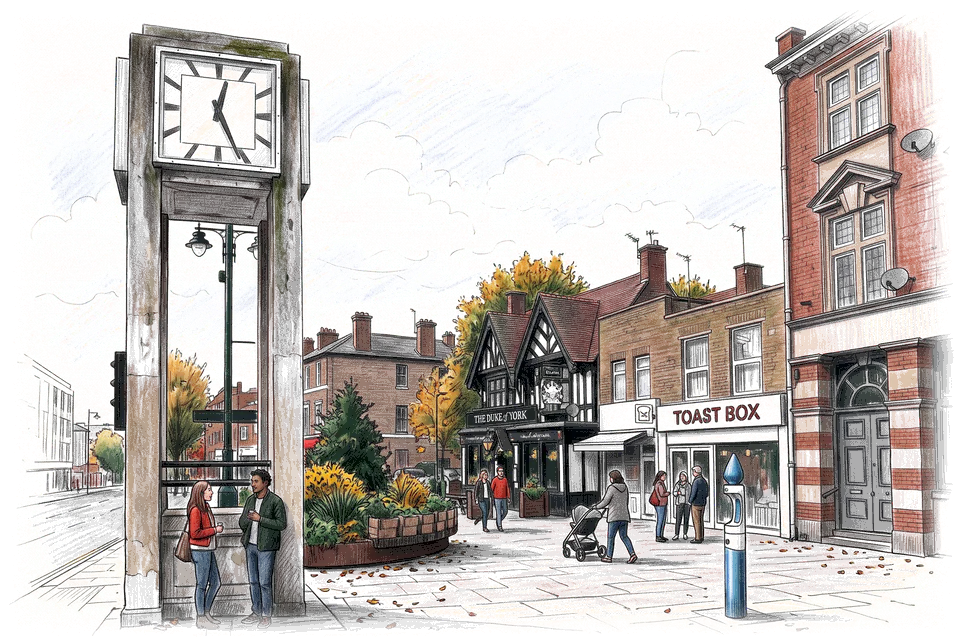
£420a month more: London's average rent against Dublin City's new tenancies, on the published averages
In short
A new Dublin City tenancy averages about £1,920 a month against £2,338 for London, though the two measure different things.
Hanwell is the west London area to look at first, whether your desk is near Heathrow or in the West End.
1Rents on both sides of the Irish Sea
ESRI and the RTB put the standardised average rent for a new tenancy in Dublin City at €2,301 a month in Q1 2026, the "Dublin City" row of Table 6 in ESRI's briefing slides.
- ONS average rent in London, September 2026, all sizes
- £2,338
- ESRI and RTB average for new tenancies in Dublin City, Q1 2026, about £1,920
- €2,301
- Citycomb typical 1-bed, the middle of London's areas
- £1,725
At the ECB rate of 0.8343 pounds to the euro on 9 November 2026 that is £1,920. ONS gives £2,338 as the average private rent in London in September 2026, about £420 a month more. ONS covers every size of home and tenancy, so it is a pointer, not a like-for-like gap.
Rent against pay matters more. On £45,000 take-home pay is £2,993 a month, and Citycomb's rule of thumb is 30% to 35% of it (see how much rent can I afford). The nine areas within 45 minutes of Heathrow take 49% to 58% of it for a typical 1-bed. Across London's areas a typical 1-bed runs from £1,325 to £5,725, with a middle figure of £1,725. The cheapest, Hockenden and Selsdon, have few listings (2) each; Yeading, the cheapest with more than ten (12), is £1,375 and takes 46%. The £45,000 salary page shows the same take-home figure.
Pay is the other side. On 45,000, 17.8% goes in income tax, PRSI and USC in Ireland against 20.2% in tax and National Insurance in England; the last chapter shows the sources.
The take-home calculator opens on £50,000 (£3,293 a month). Try this: type 45000 and it shows £2,993, the figure used here.
What does your salary pay each month?
£3,293a month after tax and National Insurance
A worked example for £50,000 in England, with no student loan or pension. Turn on JavaScript to type your own.
Income tax and National Insurance for 2026 to 2027 from GOV.UK; pension taken before tax, as with salary sacrifice. A guide, not a landlord's test: agents run their own checks.
2Renting in England with an Irish passport
You do not need a visa.
GOV.UK's Common Travel Area guidance says British and Irish citizens can move freely and reside in either jurisdiction, with the right to work and study.
Three English rules are worth knowing before you view a flat. GOV.UK lists the only payments a landlord or agent may charge, and anything not on the list is a prohibited payment. Your deposit must go into a government-approved scheme within 30 days. And you prove your right to rent before the tenancy starts.
GOV.UK says an Irish passport or passport card, current or expired, proves your right to rent in England, as does an online identity service provider. It applies to English tenancies only.
References are the other hurdle if you have not rented in the UK. If you rented in Ireland, Citizens Advice suggests showing your tenancy agreement and rent book or bank statements, or a character reference from an employer, and says landlords may ask for a guarantor. The referencing guide covers each check.
GOV.UK says you can apply for a National Insurance number only once you are here, it can take up to 4 weeks, and you can start work first if you can prove your right to work. The NHS says you can register with a GP without ID or proof of address. The moving to London checklist has every step in order.
3Nine areas within 45 minutes of Heathrow
If you work at Heathrow or fly home often, a short trip to the airport matters.
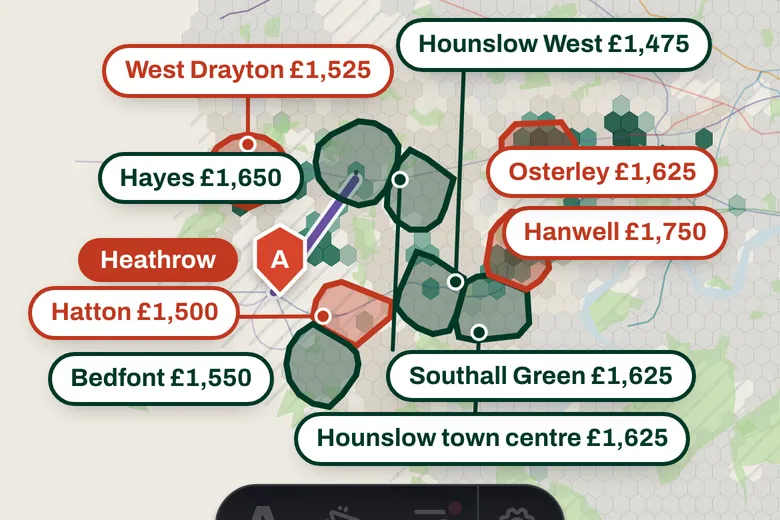
All nine areas are in west London, and four have an Elizabeth line station: Hayes, West Drayton, Hanwell and Southall Green.
Total journey time runs from 26 minutes in Hayes to 40 in Osterley and Southall Green, and typical 1-bed rents from £1,475 in Hounslow West to £1,750 in Hanwell. The trade-off is the City: eight of the nine are 51 to 80 minutes from Bank, and Bedfont, whose nearest station is Heathrow Terminal 4, is the outlier at 101.
| Area | Rent (share of pay) | To Heathrow | To Bank |
|---|---|---|---|
| Hayes | £1,650 (55%) | 26 min | 54 min |
| Hatton | £1,500 (50%) | 29 min | 78 min |
| Hounslow town centre | £1,625 (54%) | 30 min | 73 min |
| West Drayton | £1,525 (51%) | 35 min | 56 min |
| Bedfont | £1,550 (52%) | 35 min | 101 min |
| Hanwell | £1,750 (58%) | 35 min | 51 min |
| Hounslow West | £1,475 (49%) | 38 min | 80 min |
| Osterley | £1,625 (54%) | 40 min | 75 min |
| Southall Green | £1,625 (54%) | 40 min | 60 min |
Times assume a 09:00 arrival, so check the first and last trains if you work shifts. Hatton has few listings (2), Bedfont few listings (5) and Osterley few listings (9), so their rents are indications only. The Heathrow page lists every area, and the London City Airport page the 23 within 45 minutes of that airport.
Open the map with Heathrow as the desk, set to 1-beds, £1,800 and 45 minutes, and the same nine areas stay in. Drag the pin to your own workplace to see which of them still fit.
Nine west London areas have a 1-bed at £1,800 or less within 45 minutes of Heathrow, from £1,475 in Hounslow West to £1,750 in Hanwell.
Nine west London areas have a 1-bed at £1,800 or less and reach Heathrow in 45 minutes or less
4West London for central work
If your desk is in the West End or the City, Hanwell and Ealing & Haven Green are level at 45 minutes to Oxford Circus, and the rent is not.
The seven areas below are a pick of west London areas on the routes into town, not every one. Queen's Park and Shepherd's Bush are both 35 minutes from Oxford Circus, at £2,350 and £2,200 for a typical 1-bed, so the quickest in this table is not the quickest in west London.
Hanwell's typical 1-bed is £475 a month cheaper at £1,750 against £2,225, which is £5,700 a year. West Drayton at £1,525 is 49 minutes and £700 cheaper, or £8,400 a year.
| Area | 1-bed a month | To Oxford Circus | To Bank |
|---|---|---|---|
| Perivale | £1,875 | 42 min | 50 min |
| Hanwell | £1,750 | 45 min | 51 min |
| Ealing & Haven Green | £2,225 | 45 min | 53 min |
| Hayes | £1,650 | 47 min | 54 min |
| West Drayton | £1,525 | 49 min | 56 min |
| Acton | £2,000 | 52 min | 58 min |
| Chiswick | £2,250 | 53 min | 58 min |
Of these seven, Perivale is quickest at 42 minutes, and it has few listings (8), so its £1,875 is an indication only. We'd look at Hanwell first: 35 minutes from Heathrow, 45 from Oxford Circus and 51 from Bank, quicker to Bank than any other of the nine. The Elizabeth line rent guide lists the rest of the line.
If your desk is in the City, open the map with Bank as the desk, set to 1-beds, £2,000 and 60 minutes, and see which areas stay in.
The reach calculator opens on £80,000, Bank, a 1-bed and 35% of take-home pay, and finds 218 areas. Try this: type 45000 and it finds none, because the cheapest typical 1-bed, £1,325, is above 35% of £2,993 (£1,048), and 40% (£1,197) is still short.
How far does your salary reach?
218areas have a typical 1-bed at or under £1,661 a month
- Take-home a month
- £4,746
- Rent at 35%
- £1,661
Quickest to Bank: Forest Gate (£1,550, 36 min), Grove Park (£1,575, 38 min), Seven Kings (£1,525, 40 min).
See them on the mapA worked example for one salary of £80,000 in England. Turn on JavaScript to type your own.
An area counts when its typical asking rent (Mid finish) is at or under the rent; areas with no figure never count. Journey times are total journey times for a 09:00 arrival at the place you pick. Take-home pay has no student loan or pension. A guide, not a landlord's test: agents run their own checks.



5The first month's cost
Signing day takes one month's rent plus a deposit of up to five weeks' rent, which is £3,769.23 in Hanwell.
Picture viewing a typical Hanwell 1-bed on a Saturday and wanting it. A holding deposit of up to one week's rent, £403.85, can reserve it. At signing the landlord then takes the month's rent and the deposit, and must put that deposit in a government-approved scheme within 30 days.
Signing day in Hanwell takes £3,769.23: one month's rent and a five-week deposit.
Moving into a Hanwell 1-bed takes £3,769.23 on signing day
| First month's rent | £1,750.00 |
|---|---|
| Tenancy depositfive weeks' rent, the cap | £2,019.23 |
| Cash on signing day | £3,769.23 |
GOV.UK's Tenant Fees Act guidance caps the deposit at five weeks' rent where the annual rent is under £50,000, and the holding deposit at one week's rent. Read the holding deposit guide before you pay anything.
Bills start in the first month too. The move-in calculator opens on £1,750 a month in Ealing, where Hanwell is, council tax Band D, with no removals or furniture. It shows £4,143 to have ready: the rent, a £2,019 deposit and £374 of energy, water and council tax. Change the rent or borough to match your flat, and see what the rent leaves in the affordability sheet.
How much do you need to move in?
£4,143to have ready by moving day, first month's bills included
A worked example for £1,750 a month in Ealing, Band D, with no removals or furniture. Turn on JavaScript to type your own.
A landlord can ask for one month's rent in advance and a deposit of up to 5 weeks' rent (6 when the rent is £50,000 a year or more). Bills are one month of energy (Ofgem's October to December 2026 cap), water (Thames Water, studio or 1 bed) and council tax (2026 to 2027, in 12 payments). Removals and furniture are your own figures; we add none.
6What changes day to day
Three everyday things differ across the Irish Sea: how much of your pay you keep, how you open a bank account, and how you pay for travel.
Pay first. The Department of Finance's Budget 2026 tables show a single PAYE employee on 45,000 keeping €37,010 a year in Ireland, with 17.8% going in income tax, PRSI and USC. In England, 20.2% of £45,000 goes in tax and National Insurance, which leaves £2,993 a month. Euros and pounds are different money, so compare the shares, not the amounts.
A bank account comes next. Monzo says you need to live in the UK full time with the right to reside here, and lists an active, valid UK tenancy agreement among its proofs of address, so a signed tenancy can serve as that proof. Other banks set their own rules, so check before you apply.
Travel is the last. TfL says many contactless cards issued outside the UK can be used to pay as you go for travel, and that overseas charges may apply, so check with your card issuer. Leap's FAQ page lists Irish operators only and does not mention London, so plan on a contactless card or an Oyster card.
What else do people ask?
Is London rent higher than Dublin rent?
On the published averages, yes by about £420 a month, but they measure different things. ESRI and RTB give €2,301 a month for new tenancies in Dublin City in Q1 2026, about £1,920 at the ECB rate of 0.8343 on 09/11/2026. ONS gives £2,338 for the average London private rent in September 2026, all sizes and all tenancies.
Do I need a visa to move from Dublin to London?
No. GOV.UK says British and Irish citizens can move freely and reside in either jurisdiction under the Common Travel Area, with the right to work and study.
Do I need a right to rent check as an Irish citizen?
Yes, if you rent in England. GOV.UK lists an Irish passport or passport card, current or expired, as proof for British and Irish citizens. You do not need to prove your right to rent in Wales, Scotland or Northern Ireland.
Which London areas are within 45 minutes of Heathrow?
Nine areas, from Hayes at 26 minutes to Osterley and Southall Green at 40, according to Citycomb's journey times for a weekday 09:00 arrival. Their typical 1-beds run from £1,475 in Hounslow West to £1,750 in Hanwell.
How much deposit will I pay for a London flat?
Up to five weeks' rent where the annual rent is under £50,000, plus a holding deposit capped at one week, according to GOV.UK's Tenant Fees Act guidance. On a £1,750 a month flat the deposit is £2,019.23 and the holding deposit £403.85.
What is different about renting in England?
GOV.UK lists the only payments a landlord or agent may charge: rent, a deposit of up to five weeks' rent where the annual rent is under £50,000, a holding deposit of up to one week and a short list of others. Anything else is a prohibited payment. The landlord must also put your deposit in a government-approved scheme within 30 days, according to GOV.UK, and you prove your right to rent before the tenancy starts.
How do I open a UK bank account when I move from Dublin?
Monzo says you need to live in the UK full time with the right to reside here, and it lists an active, valid UK tenancy agreement among its proofs of address, with a passport as photo ID. Other banks set their own rules, so check each one before you apply.
What if I have no UK references?
Say so early and offer other evidence. If you rented in Ireland, Citizens Advice suggests a tenancy agreement and rent book or bank statements, or a character reference from an employer or someone who knows you well. A guarantor may be asked for. The referencing guide covers it.
How did we work this out?
The figures, their dates and sources
The London rent is ONS's average private rent for September 2026 (released 21/10/2026), which covers all sizes of home and all private tenancies. The Dublin rent is the ESRI and RTB Rent Index standardised average for new tenancies in Q1 2026 (published 03/09/2026), €2,301 a month, the "Dublin City" row of Table 6 in ESRI's briefing slides, which we read on 09/11/2026. We converted it at the ECB reference rate of 0.8343 pounds to the euro on 09/11/2026, which gives £1,920. The two figures cover different tenancies, sizes and dates, so the gap of about £420 is a pointer, not a like-for-like comparison.
Area rents are Citycomb's typical asking rent for a 1-bed flat at an updated (Mid) finish, from public listings, 24/10/2026. Hatton has few listings (2), Bedfont few listings (5), Osterley few listings (9) and Perivale few listings (8); the other areas in the tables have at least 17. Hockenden and Selsdon, the joint cheapest of London's areas at £1,325, each have few listings (2), so the page also gives Yeading, the cheapest area with more than ten (12). Journeys are total journey time by public transport for a weekday 09:00 arrival, from the middle of each area, from the same engine as the map. Heathrow journeys end at the airport point used on Citycomb's Heathrow commute page. Take-home pay of £2,993 a month is the Citycomb salary page figure for £45,000 a year in England with no pension or student loan; shares of take-home are rent divided by £2,993. Council tax in the move-in calculator is Ealing's 2026 to 2027 Band D charge. The 30% to 35% of take-home pay is Citycomb's own rule of thumb, from the affordability guide, not a law or a lender's test. The seven areas in the central-work table are a pick of west London areas on the routes into town, not a ranking of every west London area. Citycomb has no journey pages for Stansted, Gatwick or Luton yet, so Heathrow is the only airport used for the 9-area list. The Irish take-home comparison is Table 2 of the Department of Finance's Budget 2026 Tax Policy Changes (laid before the Oireachtas on 7 October 2025, read on 10/11/2026): a single PAYE employee on 45,000 keeps €37,010 a year after income tax, PRSI and USC, which includes PRSI at 4.2% until 30 September 2026 and 4.35% from 1 October 2026. The English figure is the Citycomb salary page for £45,000, £2,993 a month, so 20.2% goes in tax and National Insurance. The two salaries are in different currencies, so only the shares are compared. The bank and travel lines are read from Monzo's help page and TfL's pay as you go page on 10/11/2026, and from Leap's FAQ page, which lists Irish operators.
Where do these figures come from?
- ESRI and RTB: The RTB Rent Index, Q1 2026 (published 03/09/2026), national figures, 9 November 2026
- ESRI: RTB Rent Index Q1 2026 briefing presentation (Table 6, Dublin City new tenancies, €2,301), 9 November 2026
- ECB: euro reference rate, pound sterling (0.8343 on 09/11/2026), 9 November 2026
- ONS: Private rent and house prices, UK: October 2026 (released 21/10/2026), 9 November 2026
- GOV.UK: Common Travel Area guidance (updated 01/01/2026), 9 November 2026
- GOV.UK: Prove your right to rent in England, 9 November 2026
- GOV.UK: Tenant Fees Act 2019, guidance for tenants (updated 07/07/2026), 9 November 2026
- GOV.UK: Tenancy deposit protection (landlord must use a government-approved scheme within 30 days), 9 November 2026
- Department of Finance: Budget 2026 Tax Policy Changes, Table 2 (laid before the Oireachtas 07/10/2025), 10 November 2026
- Monzo: How to open a Monzo Personal Account (UK residence, ID and proof of address), 10 November 2026
- TfL: Contactless and mobile pay as you go (cards issued outside the UK), 10 November 2026
- Leap Card: Frequently asked questions (operators listed are Irish), 10 November 2026
- Citizens Advice: Information landlords ask for when you start renting, 9 November 2026
- GOV.UK: Apply for a National Insurance number, 9 November 2026
- NHS: How to register with a GP surgery, 9 November 2026
- Citycomb: salary page for £45,000 (take-home £2,993 a month), 9 November 2026
- Citycomb: public listings, typical asking rents and journey times, 24 October 2026