Info sheet
London zones explained
Checked 9 November 2026TfL adult fares 2026Rents from October 2026 listingsHow we worked it out
Zones are the rings TfL uses to price a trip, from zone 1 in the centre out to zone 9. A zone sets your fare, not your trip time, and each ring further out saves less rent for every extra hour on the train: £127 an hour from zone 1 to zone 2, £11 from zone 4 to zone 5.
Written for: Someone new to London who keeps hearing 'zone 2' and 'zone 4' and wants to know what a zone is, what it changes on fares and rent, and how far out is worth it.
£11an hour: what moving from zone 4 to zone 5 pays for the extra time on trains
In short
A London zone is a ring of stations that TfL uses to price a trip.
Zone 1 is the centre, the rings count out to zone 9, and your fare depends on which rings the trip touches.
A trip is priced by the rings it touches, and a flat takes the zone of its nearest station.
London's fare zones, from the centre out
| Ring | Fare zone |
|---|---|
| Centre | Zone 1 |
| Ring 2 | Zone 2 |
| Ring 3 | Zone 3 |
| Ring 4 | Zone 4 |
| Ring 5 | Zone 5 |
| Ring 6 | Zone 6 |
| Beyond | Zones 7-9 |
What it means for you. With a desk in zone 1 and five office days a week, a flat in zone 4 costs about £208 a month in fares, asks £1,625 for a typical 1-bed and is 56 minutes from Bank. Zone 2 costs about £149 in fares, asks £2,300 and is 40 minutes away. Zone 4 comes to £616 a month less in rent and fares together, for 16 more minutes each way.
One finding from the price list: a Monthly Travelcard is the dearest way to pay for that commute from every zone. From zone 4, pay as you go costs about £208 a month, an annual Travelcard £214 and the monthly one £246.60.
Two Central line areas show how little a zone says about the trip. George Lane in South Woodford is in zone 4 and 41 minutes from Bank. Shepherd's Bush, on the far side of Bank, is in zone 2 and takes 42. Its typical 1-bed asks £625 a month more.
1What a zone is
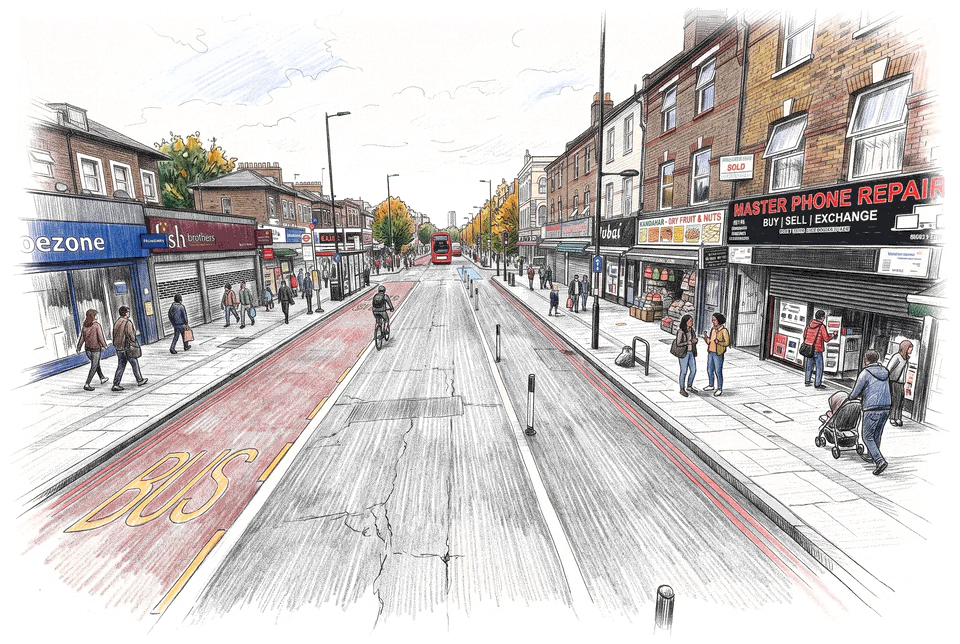
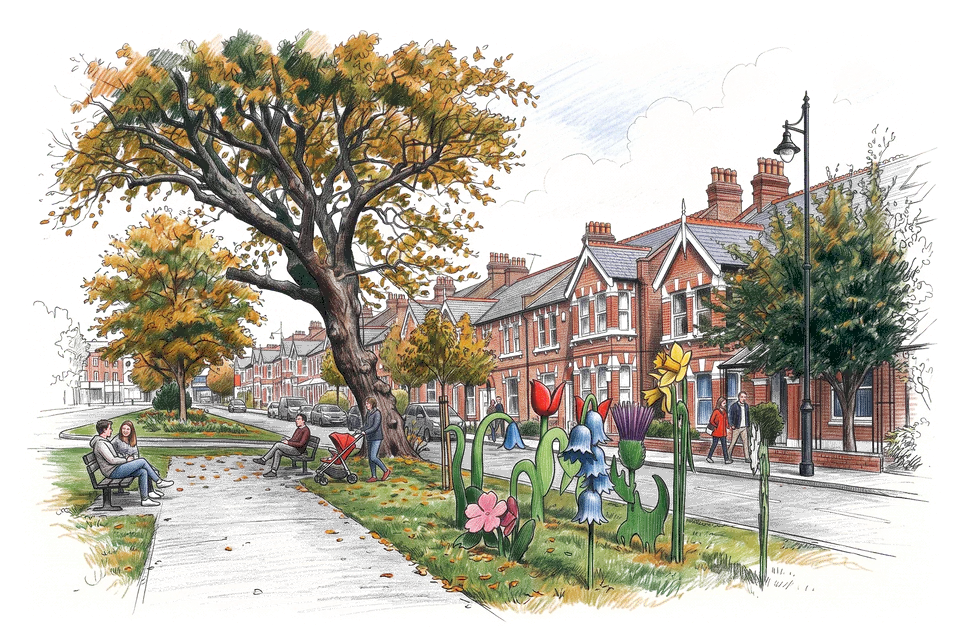
Zones belong to stations, not postcodes, so a flat's zone is the zone of its nearest station: Holloway Road, in the drawing at the top, is in zone 2.
- zones, from the centre out
- 9
- typical trip to Bank from zone 1
- 31 min
- from zone 6
- 67 min
To check a flat's zone, find its nearest station on TfL's map, then read the zone on that station's TfL page. If the station sits on a boundary, price the trip both ways.
The same rings price the Tube, DLR, Overground, Elizabeth line and most National Rail trips in London. A few stations sit on a boundary and count in both zones: Stratford and Greenwich are each in zones 2 and 3. Canary Wharf is in zone 2, Wimbledon in zone 3 and Heathrow Terminals 2 and 3 in zone 6.
Citycomb gives each area the zone of the station nearest its middle: almost all have one within 2.5 km, and a few show no zone. Rent falls and the trip to Bank lengthens with every ring, though not evenly.
From zone 1 to zone 6 the rent halves and the trip to Bank more than doubles.
Riding out from Bank: the typical trip and 1-bed rent in each zone
Median total journey time to Bank and median 1-bed asking rent across each zone's areas
| Stop | Minutes from the start | Note |
|---|---|---|
| Bank | 0 | |
| Zone 1 | 31 | 1-bed £3,075 a month |
| Zone 2 | 40 | 1-bed £2,300 a month |
| Zone 3 | 47 | 1-bed £1,900 a month |
| Zone 4 | 56 | 1-bed £1,625 a month |
| Zone 5 | 63 | 1-bed £1,550 a month |
| Zone 6 | 67 | 1-bed £1,500 a month |
2What a trip costs
A day of Tube and rail travel from zone 4 into zone 1 costs at most £12.80, however many times you tap.
- most a day from zone 4 into zone 1
- £12.80
- a month paying as you go from zone 4, against £246.60 for a Monthly Travelcard
- £208
- a week, two zones that skip zone 1
- £33.50
That £12.80 is the daily cap: once your fares reach it, the rest of the day is free, and a weekly cap does the same. A Monthly Travelcard is one price for a calendar month in the zones you choose. These are TfL's adult fares, with Travelcards and caps frozen until March 2027:
From every zone, pay as you go or an annual Travelcard beats the monthly one.
What TfL charges for travel into zone 1, 2026
| Zones 1-2monthly · daily cap £8.90 · weekly £44.70 · annual £1,788 | £171.70 |
|---|---|
| Zones 1-3monthly · daily cap £10.50 · weekly £52.50 · annual £2,100 | £201.60 |
| Zones 1-4monthly · daily cap £12.80 · weekly £64.20 · annual £2,568 | £246.60 |
| Zones 1-5monthly · daily cap £15.30 · weekly £76.40 · annual £3,056 | £293.40 |
| Zones 1-6monthly · daily cap £16.30 · weekly £81.60 · annual £3,264 | £313.40 |
For a commute alone, paying as you go from zone 4 costs about £208 a month and the annual Travelcard £214. A trip that never enters zone 1 is much cheaper: any two neighbouring zones from 2-3 out to 5-6 are capped at £33.50 a week.
Try your own trip:
What will the trip to work cost?
£125a month, the cheapest way: pay as you go
A worked example for zone 4, three office days a week. Turn on JavaScript to pick your own.
TfL 2026 adult fares on Tube and rail: two peak fares each office day, pay as you go capped daily and Monday to Sunday; a month is 52 weeks ÷ 12. Trips on other days are left out.
3The price of an hour
Each ring further out saves money, and each one saves less for every extra hour you spend travelling.
Here is the sum, for a desk in zone 1: the rent saved, less the dearer fares, divided by the extra time on trains (two trips a day, 20 working days a month). Zone 1 to zone 2 saves £775 a month in rent and adds about £15 in fares, for 9 more minutes each way, or 6 hours a month. That leaves £760, or £127 for every extra hour.
Zone 2 to 3 still pays £81 an hour and zone 3 to 4 pays £39. Then it collapses. A zone 5 1-bed asks £75 a month less than a zone 4 one, the dearer fares take £22 of that, and the £53 left pays for 4 hours 40 minutes more on trains each month: £11 an hour, under the £12.71 minimum wage. Zone 5 to 6 pays £9.
We'd stop at zone 4. Beyond it the hours earn a few pounds each, and the rents rest on thinner evidence too: fewer than five listed 1-beds sit behind 34 of the 85 zone 5 areas.
4Zone sets the fare, not the trip time
A zone tells you what the ticket costs and very little about how long the trip takes.
Whitechapel and Kensal Town are both zone 2. Whitechapel reaches Bank in 23 minutes; Kensal Town takes 54, nearly as long as the typical zone 4 area at 56. Going the other way, the fastest zone 4 area gets to Bank in 36 minutes, ahead of the median zone 2 area at 40.
That overlap is where the money is: South Woodford and Shepherd's Bush are a minute apart in journey time and two zones apart in rent.
Two zones further out: a minute quicker and £566 a month better off.
Shepherd's Bush to South Woodford: two Central line areas, 1-bed, desk at Bank
| Rent saved£2,200 down to £1,575 | £625 |
|---|---|
| Dearer faresabout £149 up to £208 a month | -£59 |
| Trip to Bank42 minutes down to 41 | 1 min less |
| Kept a monthfor a slightly shorter trip | £566 |
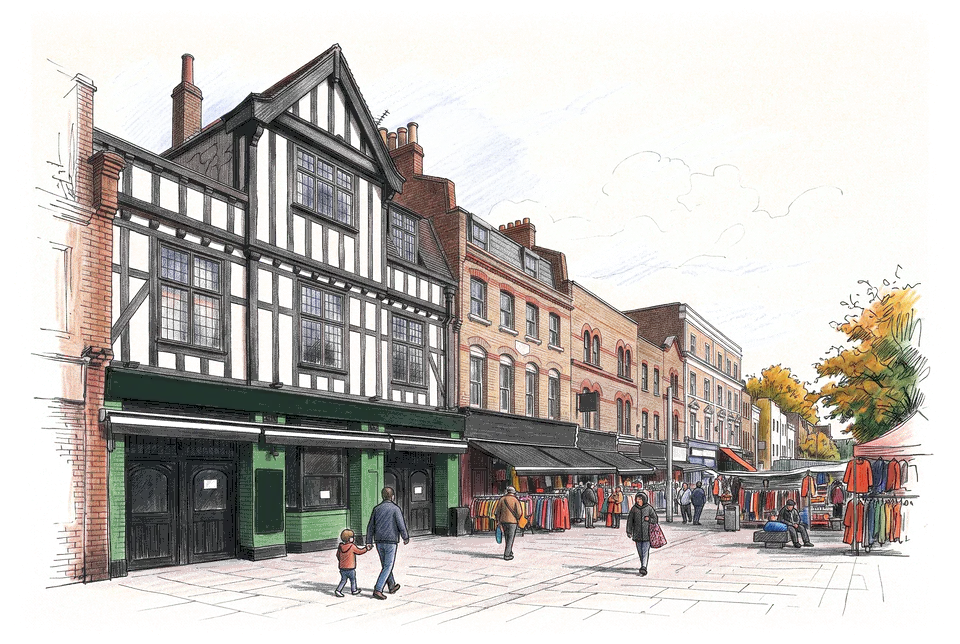
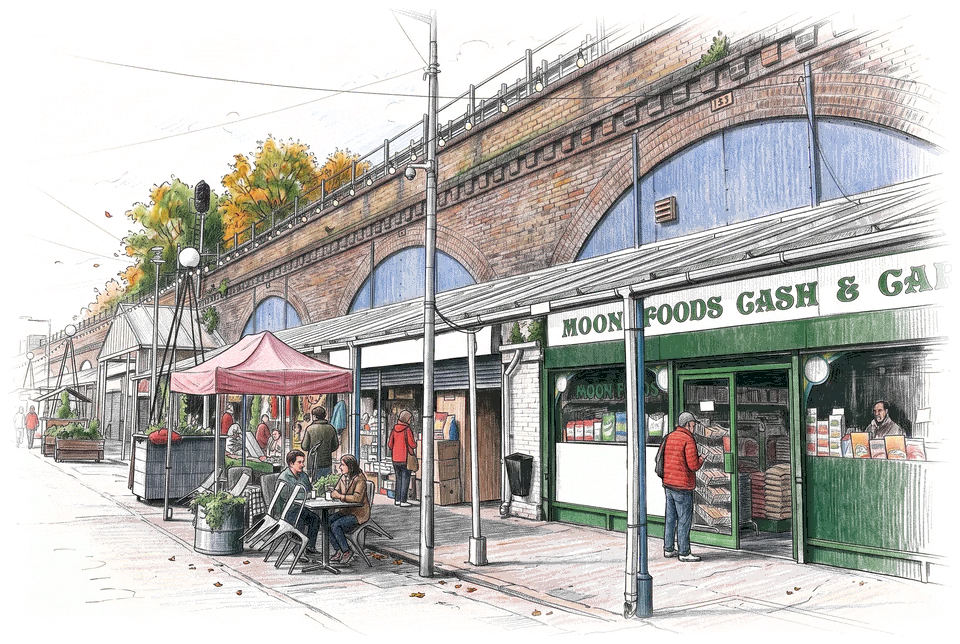
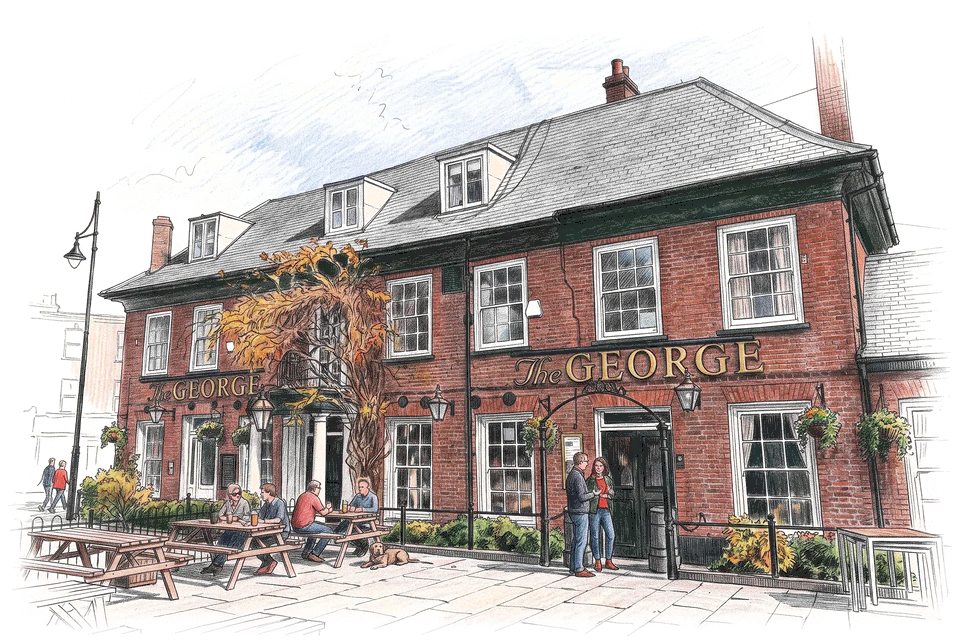
Shepherd's Bush has Uxbridge Road, Westfield and its market. George Lane in South Woodford has a Gail's, a Sainsbury's, an 18th-century pub called The George and a 1934 Odeon cinema, with Epping Forest starting just to the west. For £566 a month, we know which high street we'd walk down first.
5Try it on the map
The page can only give medians; the map uses your own desk, budget and limit.
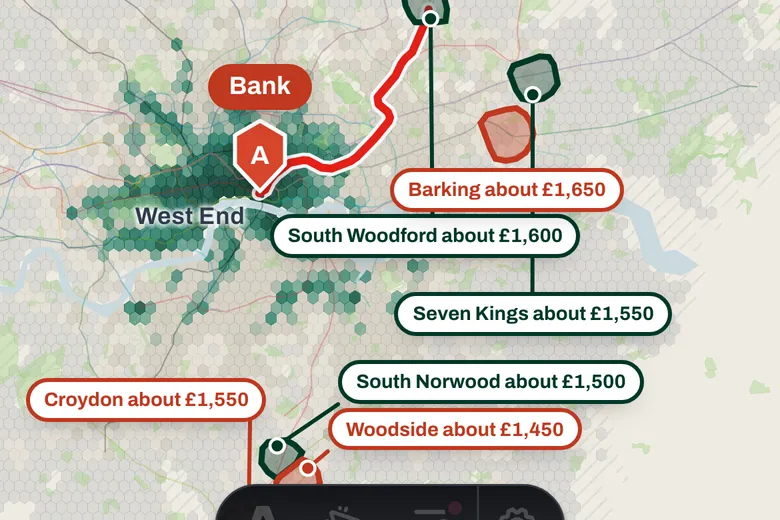
Open it with Bank as the desk, 1-beds up to £1,650 and 45 minutes, and the zone 4 and 5 areas on fast lines light up, with a few zone 3 ones such as Forest Gate and Sydenham. Then drag the limit to 60 minutes and watch which areas appear. Move the pin to your own office before you trust any of it.
Zone 4 and 5 areas on fast lines reach Bank within 45 minutes.
Six of the 11 zone 4 and 5 areas that reach Bank within 45 minutes, 1-beds at £1,650 or less
What else do people ask?
How many zones are there in London?
Nine. Zone 1 is the centre and zone 9 reaches stations beyond the Greater London boundary. TfL's 2026 price list has caps and Travelcards for every run of zones from 1 to 9. All of Citycomb's areas with a zone fall in zones 1 to 6.
What zone is my postcode in?
None: zones belong to stations, not postcodes. Find your nearest station on TfL's fare finder or its station page, which shows the zone beside the name. When a listing says a flat is in zone 3, it means the nearest station is.
Which zone are Stratford, Canary Wharf, Heathrow, Wimbledon and Greenwich in?
On TfL's station pages: Stratford is in zones 2 and 3, Canary Wharf in zone 2, Wimbledon in zone 3, Greenwich in zones 2 and 3 and Heathrow Terminals 2 and 3 in zone 6. Pay-as-you-go fares at those stations depend on the journey, so check TfL's fare finder for yours.
Is a monthly Travelcard worth it?
Not for a commute alone. At five office days a week from zone 4, pay as you go costs about £208 a month, an annual Travelcard £214 and the monthly one £246.60. A Travelcard starts to win when evenings and weekends add a lot of extra trips.
Is a zones 1-2 Travelcard dearer than zone 1 only?
No. TfL charges the same for both: an £8.90 daily cap, £44.70 a week and £171.70 for a Monthly Travelcard. That is why moving from zone 1 to zone 2 adds nothing to a Travelcard.
Does the zone matter if I do not work in zone 1?
Yes, and it usually costs less. A trip that never enters zone 1 is capped at £33.50 a week for any two neighbouring zones from 2-3 out to 5-6, against £52.50 for zones 1-3.
How does Citycomb decide an area's zone?
It uses the zone of the station nearest the middle of the area, if one sits within 2.5 km. Almost every area has one; the rest, mostly on the edge of London, show no zone.
How did we work this out?
The figures, their dates and sources
Fares, caps and Travelcards are TfL's Adult rate prices 2026, in force from 1 March 2026. TfL's press release of 20 February 2026 says Travelcard prices, and so the daily and weekly caps, are frozen until March 2027; pay as you go singles rose on 1 March 2026 (Mayoral Decision MD3464, table 1.2). Station zones are from TfL's station pages. All were read between 31/10/2026 and 09/11/2026.
Zones, rents and journey times use Citycomb's areas. An area takes the fare zone of the station nearest its middle when one sits within 2.5 km: 37 areas fall in zone 1, 103 in zone 2, 89 in zone 3, 98 in zone 4, 85 in zone 5 and 66 in zone 6. The rest have no zone, mostly because no station is that close and a few because the nearest one has no London fare zone. Stations on a boundary, such as Stratford, are priced by TfL in both zones; check TfL's fare finder for your own trip.
Rents are Citycomb's typical asking rent for a 1-bed in an updated (Mid finish) flat, from public listings read in October 2026. A zone's figure is the median of its areas' typical rents, so it can differ by up to £25 from figures on area pages, which round to the nearest £50. Fewer than 5 listed 1-beds sit behind 5 areas in zone 2, 11 in zone 3, 21 in zone 4, 34 in zone 5 and 40 in zone 6.
Journey times are total journey time to Bank for a weekday 09:00 arrival, from the middle of each area, on TfL timetables as loaded in the app. A zone's time is the median of its areas.
The price of an hour is our own arithmetic, for a desk in zone 1 and five office days a week: the drop in the zone's median 1-bed rent, less the rise in the cheapest way to pay fares, divided by the extra minutes each way × 2 trips × 20 working days. The cheapest way is the lowest of pay as you go (two peak singles into zone 1 a day, £3.10, £3.60, £3.90, £4.80, £5.30 and £5.90 from zones 1 to 6, five days a week, 52 weeks ÷ 12), the monthly Travelcard and the annual Travelcard ÷ 12. The cheapest of the three comes to £134, £149, £169, £208, £230 and £256 a month from zones 1 to 6. The hour sums count 20 working days a month, while the pay as you go line uses 52 weeks ÷ 12, about 21.7 days a month. The fares leave out every trip that is not the commute, which a Travelcard would cover.
Where do these figures come from?
- TfL: Adult rate prices 2026 (daily and weekly caps, Travelcards), 8 November 2026
- Mayor of London: Mayoral Decision MD3464, March 2026 Transport for London fare changes, 9 November 2026
- TfL: fares changing 1 March; Travelcards frozen until March 2027 (press release, 20 February 2026), 9 November 2026
- TfL: Stratford Underground station (fare zones 2 and 3), 31 October 2026
- TfL: Canary Wharf Underground station (zone 2), 9 November 2026
- TfL: Wimbledon Underground station (zone 3), 9 November 2026
- TfL: Heathrow Terminals 2 and 3 Underground station (zone 6), 9 November 2026
- TfL: Greenwich DLR station (zones 2 and 3), 9 November 2026
- GOV.UK: National Minimum Wage and National Living Wage rates, 8 November 2026
- Citycomb: typical asking rents and total journey times by area, October 2026, 9 November 2026