Head to head
East Dulwich vs West Dulwich: rent and journeys
Checked 9 November 2026Rents from October 2026 listingsEast Dulwich zone 2, West Dulwich zone 3How we worked it out
For someone with a Travelcard into zone 1, West Dulwich is £5,041 a year cheaper than East Dulwich on a typical 2-bed, and 11 minutes quicker to Oxford Circus. East Dulwich has the high street.
Written for: Someone renting a 2-bed or 3-bed in south-east London who wants a village feel, has a desk in central London and is choosing between East Dulwich and West Dulwich.
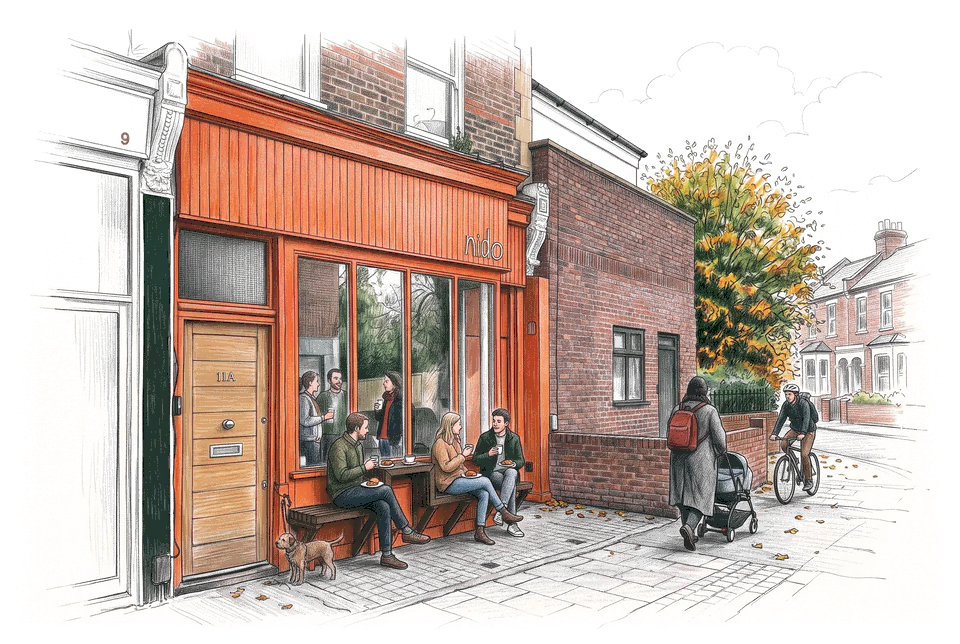
£5,041a year cheaper in West Dulwich for an updated 2-bed, after the zone 3 Travelcard (9 West Dulwich listings)
In short
A typical 2-bed asks £2,675 a month in East Dulwich and £2,225 in West Dulwich (an updated, Mid finish flat), and West Dulwich is also quicker to Oxford Circus, 45 minutes against 56.
Pick East Dulwich for the high street, with 44 independent places to eat and drink within 10 minutes; pick West Dulwich for quicker trains to Oxford Circus and King's Cross, a lower rent and quieter streets. Neither has a Tube station: both are National Rail only.
1Which is cheaper, East Dulwich or West Dulwich?
West Dulwich is £450 a month cheaper on a 2-bed, and still cheaper after paying for the zone 3 Travelcard.
The zone 3 Travelcard takes back £359 of a £5,400 saving.
What East Dulwich costs a year more than West Dulwich, net of the Travelcard
| East Dulwich rent, 12 months£2,675 a month | £32,100 |
|---|---|
| West Dulwich rent, 12 months£2,225 a month | £26,700 |
| Rent saved in West Dulwich£450 a month | £5,400 |
| Extra Travelcard from West Dulwich£29.90 a month, zones 1 to 3 against 1 to 2 | -£359 |
| West Dulwich is cheaper in a year, net | £5,041 |
That receipt is the whole running-cost answer: rent plus the Travelcard, zone 3 against zone 2. If you pay as you go into zone 1 instead, the weekly cap is £52.50 from zone 3 against £44.70 from zone 2 (TfL adult fares 2026), so the saving is similar; only if you rarely travel into zone 1 does it approach the £5,400 rent gap.
The gap grows with the size of the home: £125 a month on a 1-bed (£1,950 and £1,825), £450 on a 2-bed and £475 on a 3-bed (£3,200 and £2,725).
For a 2-bed, most flats ask £2,350 to £2,850 in East Dulwich and £2,075 to £2,400 in West Dulwich, so the ranges overlap, and £450 is the gap between typical flats, not a promise for every pair.
West Dulwich's figures rest on nine listings at every size, so look at current adverts before you decide.
Moving day is a separate sum, and the calculator below covers only that: the first month's rent plus a deposit capped at five weeks' rent (Tenant Fees Act 2019). It opens on the West Dulwich rent, £4,792 to have ready, against £5,762 at the East Dulwich rent, £970 less. Type your own.
How much do you need to move in?
£4,792to have ready by moving day
A worked example for £2,225 a month in Southwark, Band D, with no bills, no removals or furniture. Turn on JavaScript to type your own.
A landlord can ask for one month's rent in advance and a deposit of up to 5 weeks' rent (6 when the rent is £50,000 a year or more). Bills are left out. Removals and furniture are your own figures; we add none.
2Which is quicker to central London?
West Dulwich is quicker to Oxford Circus by 11 minutes, to King's Cross by 5 and to Waterloo by 3, and East Dulwich is 4 minutes quicker to Canary Wharf.
West Dulwich is quicker to three, East Dulwich to one, and two are level.
Minutes to six workplaces, East Dulwich and West Dulwich
| Workplace | East Dulwich | West Dulwich |
|---|---|---|
| Oxford Circus | 56 min | 45 min |
| King's Cross | 55 min | 50 min |
| Bank | 45 min | 45 min |
| Waterloo | 49 min | 46 min |
| Stratford | 58 min | 59 min |
| Canary Wharf | 50 min | 54 min |
Bank is level at 45 minutes, and Stratford is level too, 58 against 59.
Each area has one main station, and neither has a Tube. West Dulwich also lists Sydenham Hill station, a 14-minute walk in the app, and East Dulwich lists Denmark Hill by bus.
The two stations run to different London termini: East Dulwich to London Bridge, West Dulwich to London Victoria, about four trains an hour each on a weekday off-peak (Wikipedia, read 9 November 2026). That fits the chart: the Victoria end is the quicker start for Oxford Circus and King's Cross, and the London Bridge end holds level at Bank and wins at Canary Wharf. Check National Rail for your own hours.
Waterloo (3 minutes) is at the margin of what counts as a difference, King's Cross (5) and Canary Wharf (4) are small ones, and the 11 minutes to Oxford Circus stands clear.
3Which has the better high street and parks?
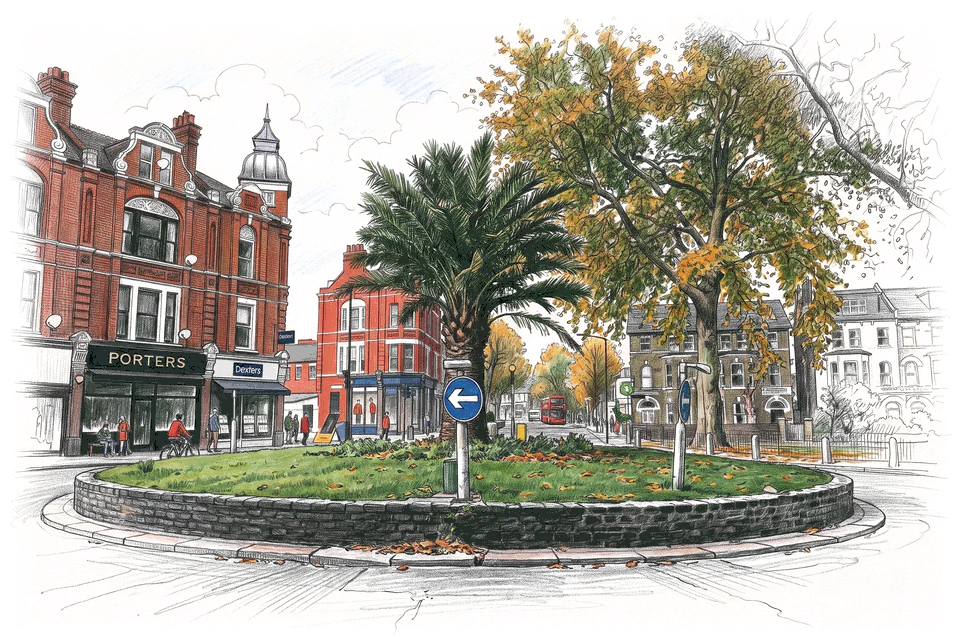
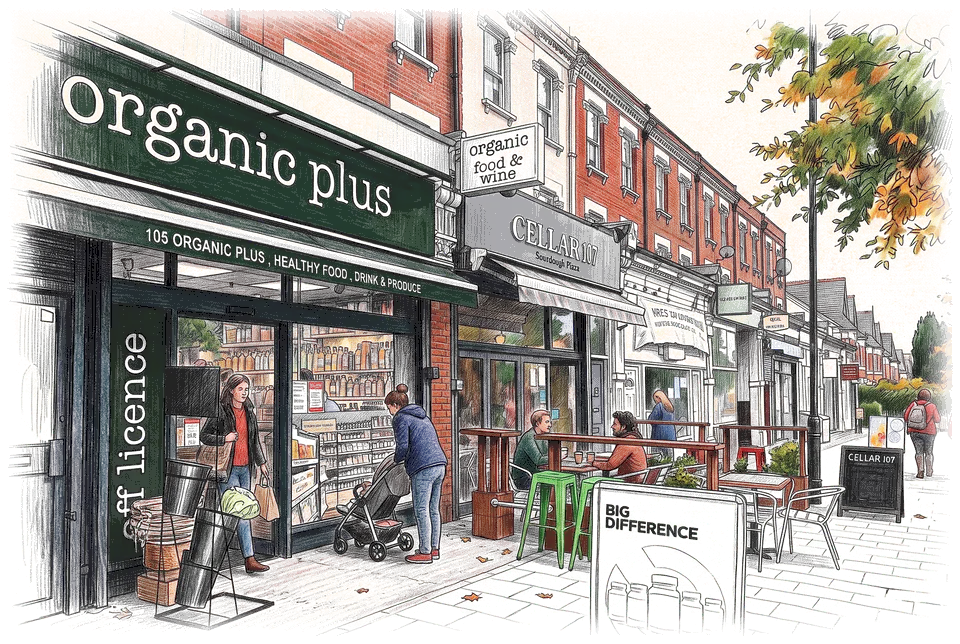
East Dulwich has the better high street, West Dulwich the quieter, leafier streets.
Eight in ten of the places to eat and drink within 10 minutes of the middle of East Dulwich are independent. Citycomb's Feel rating for independent shops, cafés, pubs and markets within a walk is Very there and Not very in West Dulwich.
A Saturday in East Dulwich can start with brunch at Söderberg on Lordship Lane, take in cheese at Mons Cheesemongers and fish at Moxon's, and end on Goose Green, 7 minutes from the middle of the area. North Cross Road has a Saturday market, and Peckham Rye Common is 9 minutes away.
West Dulwich is the quieter of the two: Citycomb rates its noise from main roads, railways and late-night venues as very low, against fairly low in East Dulwich, and it has 17% tree canopy around homes, against 11% across London. A Saturday there is the deli and café at Il Sovrano and a chocolate from Chococo, both on Croxted Road, then Belair Park and its lake, 12 minutes from the middle of the area. Dulwich Park is 14, and Dulwich Wood to the south has Cox's Walk.
Schools and catchments, the other thing many Dulwich searchers want, are not in Citycomb's data, so this page does not compare them. The Dulwich Village and East Dulwich comparison sets Dulwich Village beside East Dulwich.

4Which has the older homes?
East Dulwich is older, with 69% of homes built before 1919 against 37%, though the two have the same share of flats, 61%.
| Home | East Dulwich | West Dulwich |
|---|---|---|
| 2-bed, typical | £2,675 | £2,225 |
| Listings behind the 2-bed | 45 | few listings (9) |
| Flats | 61% | 61% |
| Houses | 38% | 39% |
| Terraced houses | 28% | 20% |
| Detached houses | 1% | 6% |
| Built before 1919 | 69% | 37% |
West Dulwich has more detached houses, 6% against 1%, and fewer terraces.
5Which nearby areas beat the Dulwiches on rent or time?
Tulse Hill East and Forest Hill are cheaper than West Dulwich on a 2-bed, and Peckham Rye and Bellenden is quicker than both Dulwiches.
| Area | 2-bed | Listings | To Oxford Circus | To Bank |
|---|---|---|---|---|
| Forest Hill | £2,125 | 18 | 58 min | 46 min |
| Tulse Hill East | £2,150 | few listings (7) | 47 min | 42 min |
| West Dulwich | £2,225 | few listings (9) | 45 min | 45 min |
| Honor Oak | £2,350 | few listings (10) | 52 min | 39 min |
| Peckham Rye and Bellenden | £2,550 | few listings (9) | 39 min | 30 min |
| East Dulwich | £2,675 | 45 | 56 min | 45 min |
Tulse Hill East is £75 under West Dulwich and level to it on Oxford Circus. Peckham Rye and Bellenden is £125 under East Dulwich and 17 minutes quicker to Oxford Circus. Forest Hill and Honor Oak have a guide of their own, and Dulwich Village has its own area page.
6Which Dulwich fits your commute and budget?
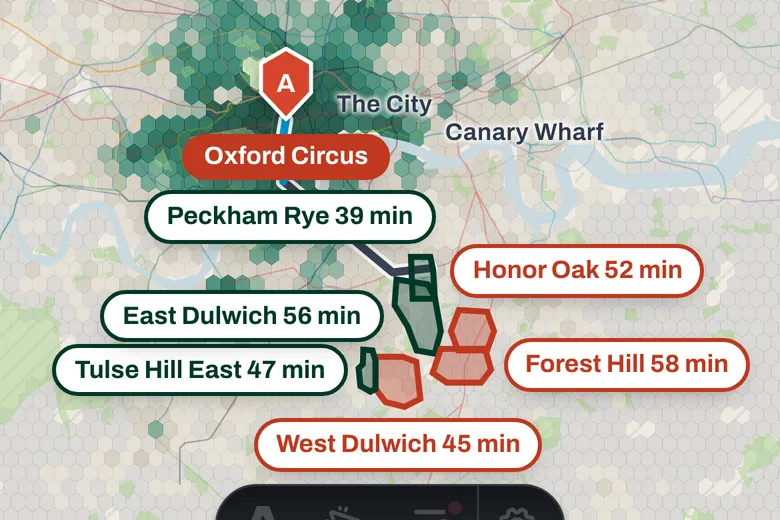
Set Oxford Circus as the desk, a 2-bed and 50 minutes, and three of the six areas fit: Peckham Rye and Bellenden, West Dulwich and Tulse Hill East.
Honor Oak, East Dulwich and Forest Hill are beyond it.
Then add a £2,500 budget: West Dulwich and Tulse Hill East stay in, and Peckham Rye and Bellenden drops out on rent. If your desk is at Canary Wharf instead, set 52 minutes and a £2,700 budget and East Dulwich fits (50 minutes) where West Dulwich (54) does not. The map below labels each hex with its minutes to Oxford Circus, from Peckham Rye and Bellenden (39) to Forest Hill (58). It does what this page can't: put the pin on your own office, and the line falls where your journey and budget put it.
Three of the six clear 50 minutes; with a £2,500 budget, two do.
Six areas by minutes to Oxford Circus, and which clear 50
What else do people ask?
Which is more expensive, East Dulwich or West Dulwich?
East Dulwich. A typical 2-bed is £2,675 a month there and £2,225 in West Dulwich, £5,400 a year apart. After the extra zone 3 Travelcard for someone commuting into zone 1, West Dulwich is £5,041 a year cheaper.
Is West Dulwich cheaper than East Dulwich?
Yes. A typical 2-bed is £2,225 a month in West Dulwich and £2,675 in East Dulwich, and a 3-bed £2,725 against £3,200. A 1-bed is closer, £1,825 against £1,950. West Dulwich's figures rest on nine listings each, so treat the gaps as a guide.
Does East Dulwich or West Dulwich have a Tube station?
Neither. Both are served by National Rail only, from East Dulwich station and West Dulwich station, and each has one main station. East Dulwich is in zone 2 and West Dulwich in zone 3.
Which is quicker to central London?
West Dulwich to Oxford Circus, by 11 minutes (45 against 56), to King's Cross by 5 and to Waterloo by 3. Bank and Stratford are level, and East Dulwich is 4 minutes quicker to Canary Wharf.
Which has more parks?
About level, with West Dulwich the greener. East Dulwich's nearest big park is Goose Green, 7 minutes away, with Peckham Rye Common at 9. West Dulwich's is Belair Park at 12 minutes, with Dulwich Park at 14 and Dulwich Wood to the south. Citycomb rates West Dulwich very green and East Dulwich fairly green.
Which is nicer to live in, East Dulwich or West Dulwich?
It depends what you want. East Dulwich has the livelier high street: Citycomb rates its independent shops, cafés, pubs and markets within a walk as Very, against Not very in West Dulwich. West Dulwich has the quieter, tree-lined streets, rated Very against Fairly for East Dulwich, and is the greener, with Belair Park and Dulwich Wood.
What is a cheaper alternative near both?
Tulse Hill East is £2,150 for a 2-bed, £75 under West Dulwich and 47 minutes to Oxford Circus, and Forest Hill is £2,125 on 18 listings.
How did we work this out?
The figures, their dates and sources
Rents. Citycomb's typical asking rent for an updated (Mid finish) flat, from public listings collected 8 to 14 October 2026 (the week in the rents file, built 17 October 2026), in £25 steps, as quoted in the text of each area page (the rent chart on an area page rounds to £50). The area pages print their own "Public listings" date, 24/10/2026, beside the same figures. "Most flats" is the middle half of listings, the 25th to the 75th percentile. East Dulwich rests on 18 listings for 1-beds, 45 for 2-beds and 6 for 3-beds; West Dulwich and Dulwich Wood on 9, 9 and 9, so its figures can move more from week to week. Nearby 2-bed figures rest on 7 listings in Tulse Hill East, 18 in Forest Hill, 10 in Honor Oak and 9 in Peckham Rye and Bellenden.
Journeys. Total journey time for a weekday 09:00 arrival from the middle of each area, using TfL and National Rail timetables as loaded in the app: the walk to the station, the wait and ride, and the walk at the far end. Times under 3 minutes apart are treated as level; a gap of 3 or more is called a difference, and one rule is used throughout. Which station runs to which terminus, and how often, is from each station's Wikipedia page, read on 9 November 2026: the frequencies there are for a typical weekday off-peak, from the National Rail timetables of May 2022 (East Dulwich) and December 2024 (West Dulwich), so check National Rail for today's. "West Dulwich" here means West Dulwich and Dulwich Wood, the area around West Dulwich station.
Zones and fares. East Dulwich reads zone 2 and West Dulwich zone 3. A monthly Travelcard is £171.70 for zones 1 to 2 and £201.60 for zones 1 to 3 (TfL adult fares 2026, read 9 November 2026), a gap of £29.90 a month or £359 a year. For pay as you go into zone 1, the weekly cap is £44.70 for zones 1 to 2 and £52.50 for zones 1 to 3 (same TfL page), £7.80 a week more from zone 3. A deposit is capped at 5 weeks' rent where the annual rent is under £50,000: the annual rent divided by 52, times 5 (Tenant Fees Act 2019, in force from 1 June 2019 for new tenancies and 1 June 2020 for all; GOV.UK guidance for tenants, read 9 November 2026).
Places and homes. Home mix, conservation areas, tree canopy, road noise and counts of independent places are from VOA and ONS home stock (31/03/2026), Historic England, Overture places (23/09/2026) and Citycomb's own area data, and can miss places. Schools and catchments are not in the data.
Where do these figures come from?
- TfL fares: Travelcard prices (web page), 9 November 2026
- TfL adult fares 2026: monthly Travelcards by zone, 9 November 2026
- Citycomb area data, October 2026: East Dulwich, 9 November 2026
- Citycomb area data, October 2026: West Dulwich and Dulwich Wood, 9 November 2026
- GOV.UK: Tenant Fees Act 2019, guidance for tenants (the deposit cap), 9 November 2026
- Wikipedia: West Dulwich railway station (operator and London terminus), 9 November 2026
- Wikipedia: East Dulwich railway station (operator and London terminus), 9 November 2026
- Citycomb: how the figures are worked out, 9 November 2026
- VOA, ONS and Census home stock (Open Government Licence), 31/03/2026, 9 November 2026